




What are the main side effects of caffeine pouches?
Caffeine pouches carry real health risks, and the side effects range from mild discomfort to serious medical emergencies. Unlike coffee, these pouches deliver caffeine through the lining of the mouth, pushing it into the bloodstream faster than digestion allows. That speed changes the risk profile considerably.
Common side effects include:
- Jitteriness and restlessness
- Increased heart rate
- Nausea and vomiting
- Headaches
- Anxiety and nervousness
- Difficulty sleeping
- Gastrointestinal upset
In more serious cases, high caffeine doses can trigger dangerous heart rhythm abnormalities, tremors, and seizures. A single high-dose pouch can contain a substantial amount of caffeine, which is enough to push many people well past a comfortable threshold in one sitting.
Detailed health risks from caffeine pouch use
Caffeine is a stimulant, and pouches amplify its effects by bypassing the digestive system. Buccal absorption delivers caffeine directly into the bloodstream within minutes, producing a faster and more intense response than a cup of coffee. For people unaccustomed to this delivery method, the risk of accidental overdose rises sharply.
The physiological effects cover a wide range:
- Elevated blood pressure and rapid heart rate
- Gastrointestinal distress, including nausea and stomach cramps
- Persistent headaches, especially during or after heavy use
- Insomnia and disrupted sleep cycles
- Tremors in high-dose scenarios
- Seizures and dangerous cardiac arrhythmias in severe cases
- Gum irritation and discoloration from prolonged contact with oral tissue
Gum and dental effects are often overlooked. Extended contact between the pouch and gum tissue can cause irritation, discoloration, and potential long-term dental problems. Most people focus on the systemic effects and miss this localized risk entirely.
Who faces the highest risk from caffeine pouches?
Certain groups face disproportionate danger from caffeine pouch use, and for some, any use carries serious risk. The adverse effects of caffeine pouches hit hardest in people whose bodies or medications cannot tolerate rapid stimulant delivery.
Groups that should avoid caffeine pouches entirely:
- Children under 12: Pediatricians recommend zero caffeine for this age group.
- Teenagers: The recommended daily limit for teens is 100 mg per day; a single high-dose pouch can exceed that.
- Pregnant and breastfeeding women: Caffeine crosses the placenta and enters breast milk.
- People with cardiovascular conditions: Rapid heart rate and elevated blood pressure compound existing risks.
- Individuals with anxiety disorders: Stimulant delivery at this speed worsens anxiety symptoms directly.
- People with seizure disorders: High-dose caffeine lowers the seizure threshold.
- Those taking stimulant medications: Combining caffeine pouches with ADHD medications or other stimulant prescriptions creates additive effects that can be dangerous.
A compounding problem is that caffeine pouches often lack standardized labeling due to regulatory classification gaps. They are marketed as foods or dietary supplements in most jurisdictions, with no age-purchase restrictions. A teenager who uses a pouch alongside coffee, soda, or an energy drink can easily exceed safe limits without realizing it.
What to do when side effects become an emergency
Severe reactions to caffeine pouches require immediate action. Knowing which symptoms cross the line from uncomfortable to dangerous can make a real difference.
Seek emergency care or call 911 immediately if you notice:
- Severe or irregular heart palpitations
- Chest pain or pressure
- Seizures
- Intense, uncontrollable anxiety or panic
- Persistent vomiting
- Confusion or loss of consciousness
If a child has swallowed a caffeine pouch, call the Poison Help Line at 1-800-222-1222 right away. Experts are available 24 hours a day, seven days a week, at no cost.
Pro Tip: Track your total daily caffeine from all sources, including coffee, tea, soda, and energy drinks, before adding a pouch. Stacking sources is the most common path to accidental overdose.
Store pouches out of reach of children, in their original containers, and never alongside food or snacks. Backpacks, purses, and vehicles are common access points for young children.
Expert warnings on dependence and long-term risks
Long-term caffeine pouch use creates a cycle that is harder to break than most people expect. Sleep expert Dr. Michael Mak warns that regular pouch use builds physical dependence, raises tolerance over time, and disrupts sleep architecture, which can lead to chronic insomnia. The irony is that people often reach for more caffeine to compensate for the fatigue caused by poor sleep, deepening the cycle.
Dr. Yoshua Quinones advises that daily pouch use is inadvisable given the potency and speed of delivery. He recommends treating them as occasional rather than habitual energy sources.
Healthy adults can generally tolerate moderate amounts of caffeine daily, but that figure assumes slower absorption from conventional sources. Pouches change the equation. For context on how caffeine pouch doses compare to familiar sources, see the table below.
| Source | Typical caffeine content |
|---|---|
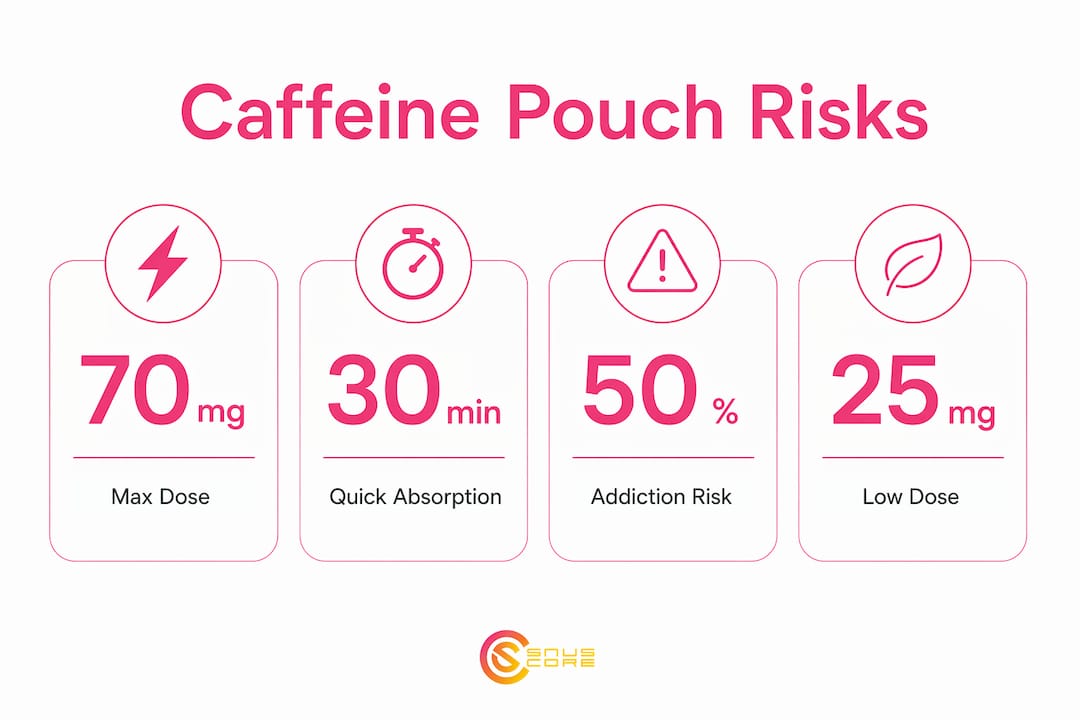
| Caffeine pouch (low dose) | 25 mg per pouch |
| Caffeine pouch (high dose) | 200 mg per pouch |
| Standard drip coffee (8 oz) | 100 mg per cup |
| Energy drink (standard can) | — |
| Espresso shot | — |
The safe daily caffeine guidelines for adults are built around gradual absorption. Pouches compress that timeline dramatically, which is why the same total milligram count hits harder and faster.
How caffeine pouches affect mood and mental health
Anxiety is the most discussed mental health effect, but it is not the only one. Caffeine increases dopamine activity in the brain, and at high doses or with rapid delivery, that effect can tip into agitation, irritability, and mood instability. For people with existing mental health conditions, the risk of worsening symptoms is real and clinically documented.
Mood changes tied to caffeine pouch use include:
- Irritability, particularly as the stimulant effect wears off
- Heightened emotional reactivity during peak absorption
- Low mood and fatigue during withdrawal periods
- Worsening of anxiety and, in vulnerable individuals, psychosis-adjacent symptoms
Caffeine withdrawal itself produces a predictable pattern: headaches, low mood, difficulty concentrating, and fatigue. People who use pouches daily and then stop abruptly often describe the withdrawal as more disruptive than they expected. That pattern is a direct sign of physical dependence, not just habit.
Key Takeaways
Caffeine pouches carry significant health risks driven by rapid buccal absorption, high per-unit doses, and a near-total absence of age or labeling restrictions.
| Point | Details |
|---|---|
| Rapid absorption raises overdose risk | Buccal delivery pushes caffeine into the bloodstream faster than coffee, increasing the chance of taking too much. |
| Single pouch can exceed teen daily limit | Pouches contain between 25 and 200 mg of caffeine each; the recommended daily caffeine limit for teens is 100 mg per day, so a single high-dose pouch can surpass that entire allowance. |
| Several groups must avoid them entirely | Children, pregnant women, and people with heart or anxiety conditions face serious risk from any use. |
| Daily use builds dependence | Tolerance develops quickly, disrupting sleep and creating a fatigue cycle that drives further use. |
| Mood effects go beyond anxiety | Irritability, low mood, and withdrawal symptoms are common with regular use. |
FAQ
Are caffeine pouches safe for healthy adults?
Healthy adults can tolerate moderate caffeine intake, but experts recommend treating pouches as occasional rather than daily use. The speed and potency of buccal absorption make it easy to overconsume, even within a technically “safe” total milligram count.
Do caffeine pouches give you a buzz?
Yes. Buccal absorption delivers caffeine to the bloodstream within minutes, producing a faster and more intense effect than coffee. That rapid onset is what makes them appealing and what raises the overdose risk.
Are caffeine pouches healthier than energy drinks?
Neither is without risk, and caffeine pouches are not a clearly safer alternative. They bypass digestive absorption, which can intensify side effects, and they currently face fewer labeling requirements than most beverages, making dose tracking harder.
How many caffeine pouches can you have in a day?
For healthy adults, total daily caffeine should stay at or below 400 mg from all sources combined. Given that a single high-dose pouch contains up to 200 mg, two pouches can already reach that ceiling before accounting for coffee, tea, or other sources.
Recommended
- Why Caffeine Pouches Are the Next Big Trend ➤ The latest news, tips, and insights on nicotine pouches | SnusCore
- Are Nicotine Pouches Safe? ➤ The latest news, tips, and insights on nicotine pouches | SnusCore
- Glick Nicotine Pouches: All You Need to Know ➤ The latest news, tips, and insights on nicotine pouches | SnusCore
- How to Use Nicotine Pouches? All You Need to Know ➤ The latest news, tips, and insights on nicotine pouches | SnusCore


