


TL;DR:
- Snuscore offers curated caffeine pouches with transparent labeling and nootropic stacks for smoother focus. Choosing the right product depends on caffeine dose, format, and ingredient transparency, especially for beginners. U.S. buyers can access safe, lab-tested options through Snuscore’s selection, emphasizing quality and clear dosage information.
For U.S. buyers, Snuscore’s curated caffeine pouch selection is the most practical starting point. Prioritize pouches with clear mg labeling and nootropic stacks like L-Theanine or Citicoline for smoother, sustained focus. Start with a low-dose pouch, confirm third-party lab testing on the label, and wait some time before assessing the effect.
Table of Contents
- Which caffeine pouch brands should you buy?
- How to pick the right caffeine pouch brand and product
- Which ingredients separate premium caffeine pouches from cheap ones?
- How do caffeine pouches compare to energy drinks and nicotine pouches?
- What are the safety and dosing rules for caffeine pouches in the U.S.?
- Where to buy caffeine pouches in the U.S. and what they cost
- What do customer reviews say about caffeine pouches?
- Key Takeaways
- Why Snuscore recommends these caffeine pouches
- Snuscore’s caffeine pouch selection for U.S. buyers
- Useful sources and further reading
- FAQ
Which caffeine pouch brands should you buy?
The strongest caffeine pouch brands available through Snuscore cover a range of strengths, formats, and flavor profiles. Here is a direct look at the featured options:
Zeus Epic Berry Light delivers a lighter dose in a berry flavor, well-suited for first-time users or those transitioning from nicotine pouches who want a gentle caffeine introduction.
ZEUS Epic Berry Extra Strong steps up the caffeine dose significantly, same berry flavor profile, for users who need more output during demanding work sessions or workouts.
Zeus Cherry Blossom Extra Strong pairs a distinct floral-fruit flavor with a high-strength dose. A solid choice when you want variety without sacrificing potency.
XQS Fruzzle Strong offers a fruit-forward flavor at a strong dose level, with a slim format that sits discreetly under the lip.
ZONE No25 Berry Blast Ultra is an ultra-strength option for experienced users. Not a starting point, but useful for high-demand situations.
Paz Light Berry Frost is a light-dose, flavor-focused pouch. Good for users who want a mild caffeine lift with a clean mint-berry finish.
Lundgrens Höståker brings a tobacco-free Scandinavian format with a distinct earthy-herbal character, appealing to users who prefer less-sweet profiles.
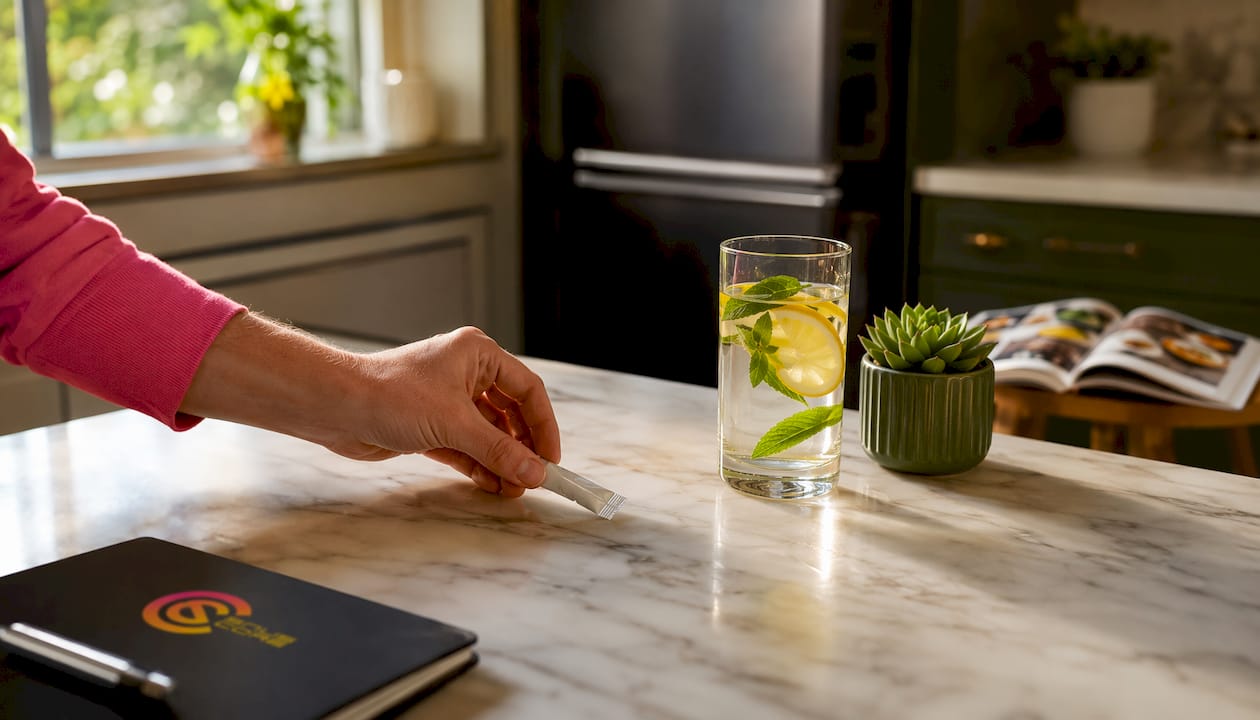
ZYN Citrus Mini 2 is a miniature-format pouch with a citrus flavor. The mini size suits users who prefer a lower-profile, more comfortable fit.
How to pick the right caffeine pouch brand and product
Choosing among popular caffeine pouches comes down to a short checklist of criteria that actually affect your experience.
Priority criteria:
- Caffeine mg/pouch. The range runs from roughly 30mg (light) to 120mg+ (ultra) for the strongest options. Match the dose to your current caffeine tolerance, not your ambition.
- Onset and duration. Sublingual absorption means you feel the effect faster than a drink. Expect onset in 15–30 minutes; duration varies by formula.
- Nootropic moderators. L-Theanine, Citicoline, theacrine, and methylliberine all reduce crash risk. Their presence on the label is a quality signal.
- Flavor and format. Mini vs. standard size affects comfort and discretion. Flavor longevity varies by brand.
- Ingredient transparency. Look for exact mg/pouch, a batch or lot number, and third-party lab testing documentation.
Questions to ask before buying:
- What is the exact caffeine mg per pouch?
- Are third-party lab reports available?
- Where is the product manufactured?
- Does the seller verify age at checkout?
- What is the return or exchange policy?
Red flags: vague “caffeine blend” language with no mg figure, no batch or lab number on the packaging, and stimulant types not disclosed on the label.
Pro Tip: If you currently use nicotine pouches, start with a 30–50mg caffeine pouch and wait a full 20–30 minutes before deciding whether to use another. Sublingual absorption can feel more intense than the same mg in a drink.
Which ingredients separate premium caffeine pouches from cheap ones?
The caffeine dose is the primary driver of effect. Everything else is secondary or supportive.
Core stimulant: caffeine. Pouches deliver caffeine through the gum and oral mucosa, bypassing some digestive delay. A 50mg pouch can feel faster and stronger than 50mg in a drink. That pharmacokinetic difference is why starting low matters.
Nootropic moderators. Premium pouches pair caffeine with L-Theanine or Citicoline to smooth the stimulant curve and reduce crash. Theacrine (TeaCrine) and methylliberine (Dynamine) extend focus duration further, but they also change interaction profiles with prescription stimulants. Consult a healthcare provider if you take prescription medications.
Alternative stimulants. Some brands use paraxanthine as the primary stimulant rather than caffeine, aiming for alertness with fewer side effects. Check the label carefully.
Secondary additives. B-vitamins and chromium appear on many labels. Dietitians note these have limited immediate effect compared with the primary caffeine dose. They are not a substitute for proper stimulant dosing.
Pouch material and flavor longevity. Most brands list pouch lifespan as about half an hour, but caffeine absorption often peaks faster than flavor lasts. Pouch material affects mouthfeel and how quickly flavor fades.
| Ingredient | Expected Effect | Typical Range | Watch For |
|---|---|---|---|
| Caffeine | Alertness, focus | 30–120mg per pouch | Dose accuracy on label |
| L-Theanine | Smoother focus, less jitter | commonly used in moderate amounts | Ratio to caffeine |
| Citicoline | Sustained cognitive support | varied amounts reported | Brand-name “Cognizin” |
| Theacrine | Extended energy, less tolerance | dosage varies | Drug interactions |
| Paraxanthine | Alertness, fewer side effects | Varies | Listed as primary stimulant |
| B-vitamins | Supplemental support | typically low amounts | Not a primary energy driver |
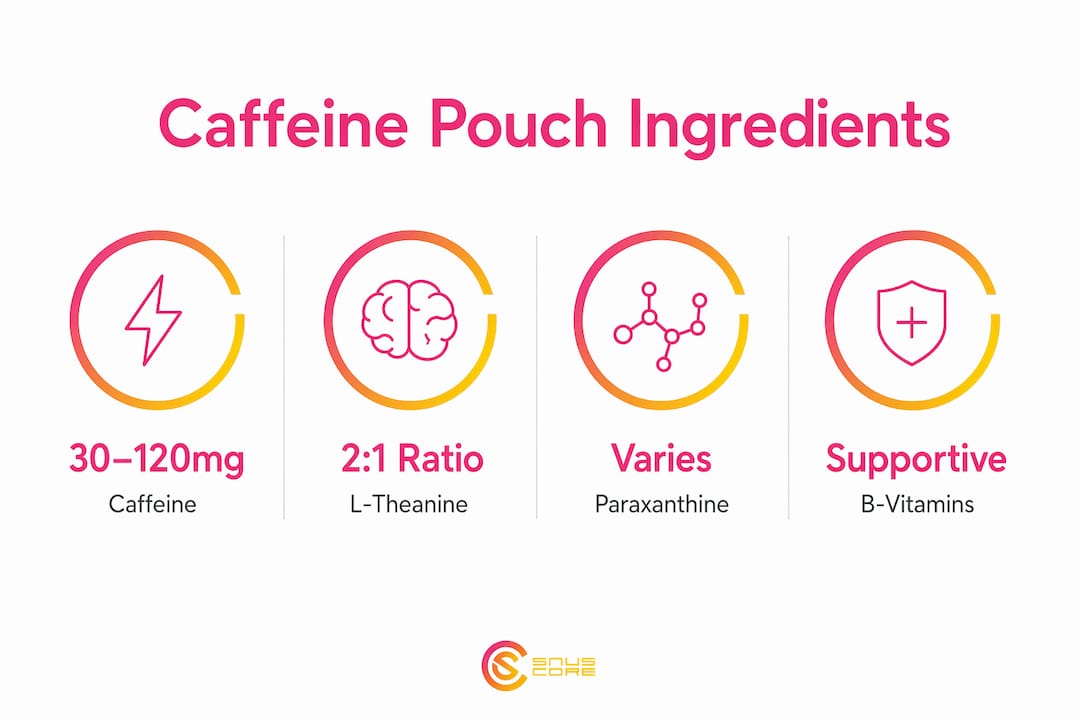
Pro Tip: Look for a caffeine + L-Theanine stack when sustained focus without a crash is the goal. A 2:1 ratio of L-Theanine to caffeine is a common benchmark in nootropic formulations.
How do caffeine pouches compare to energy drinks and nicotine pouches?
Onset and absorption. Pouches absorb through the oral mucosa, which is faster than digestive absorption from drinks. Users report feeling the effect in roughly 15 minutes. Energy drinks typically take longer because caffeine must pass through the stomach.
Dosing control. A single pouch delivers a fixed mg dose. With energy drinks, you sip continuously and often lose track of total intake. Pouches make dose management straightforward.
Stomach and bathroom issues. Caffeine pouches avoid many of the stomach irritation and restroom frequency issues linked to drinking coffee all day. No liquid volume means no bloating or urgency.
Nicotine pouches vs. caffeine pouches. Nicotine pouches contain nicotine, which is addictive. Caffeine pouches contain no nicotine and no tobacco. For users who already use nicotine pouches, the format transfer is straightforward — same placement, same timing habits — but onset and duration characteristics differ.
Use-case fit:
- Commuting: one mid-dose pouch, no spill risk
- Focused work: nootropic-stacked pouch for sustained output
- Workouts: higher-dose option 15–20 minutes before activity
- Gaming: a discreet caffeine pouch keeps focus without interrupting play
What are the safety and dosing rules for caffeine pouches in the U.S.?
Key caution: Sublingual absorption can make a 50mg pouch feel stronger than 50mg in a drink. Start at the lower end of your dose range and do not stack with coffee, energy drinks, or other caffeine sources in the same session.
Dosing guidance:
- Start at 30–50mg per pouch, especially if you are new to the format.
- Wait the full 20–30 minutes before assessing whether you need more.
- Do not exceed your established daily caffeine tolerance across all sources combined.
- Avoid using multiple pouches back-to-back without a break.
Side effects to watch for: jitteriness, elevated heart rate, sleep disruption, and mild gum or oral tissue irritation. If any of these occur, remove the pouch and reduce your dose next time.
U.S. regulatory and age notes. Caffeine pouches are sold as dietary supplements or food products in the United States. Most reputable sellers require age verification at checkout. Pregnant individuals and people with cardiovascular conditions, anxiety disorders, or stimulant-sensitive conditions should avoid caffeine pouches or consult a physician first.
This article is general information, not medical advice. Confirm current regulations and your personal suitability with a qualified healthcare provider.
Where to buy caffeine pouches in the U.S. and what they cost
Most caffeine pouch brands sell in cans of 15–20 pouches. Brand product pages commonly list both pouch count and mg/pouch, which makes price-per-dose math simple: divide the can price by the pouch count.
| Format | Typical Pouch Count | Caffeine Range | Notes |
|---|---|---|---|
| Light/mini | 15–20 | 30–50mg | Good starting point |
| Standard | 15–20 | 50–120mg | Covers moderate to strong doses |
| Strong/extra strong | 15–20 | 120mg+ | Experienced users |
Packaging and disposal. Most pouches come in a small, pocket-sized tin. Used pouches should be disposed of in regular waste. Some brands use biodegradable pouch material; check the product page for specifics.
Buying steps:
- Confirm mg/pouch on the product page before adding to cart.
- Check for a lab report or batch number.
- Compare flavor and format options.
- Start with one can at your target dose before buying in bulk.
Snuscore stocks a curated range of caffeine and tobacco-free pouches with clear labeling, age verification at checkout, and U.S. shipping. The caffeine pouch options available through Snuscore include light, strong, and ultra-strong formats across multiple flavor profiles.
What do customer reviews say about caffeine pouches?
Across caffeine pouch reviews, a few patterns appear consistently. Users who switch from energy drinks most often cite the lack of stomach issues and the portability as the top advantages. The ability to control dose precisely, one pouch at a time, also ranks high.
Negative reviews cluster around two issues: pouches that do not list exact mg/pouch, and products where the flavor fades too quickly relative to the price. Users who expected a coffee-like flavor from non-coffee-based pouches sometimes report disappointment.
For nicotine-pouch users moving to caffeine pouches, reviews note that the format feels familiar but the effect is different enough to require a short adjustment period. Starting with a light or mid-dose option consistently produces better first-use ratings than jumping straight to extra-strong.
Key Takeaways
The most effective caffeine pouches combine a clearly labeled caffeine dose with nootropic moderators like L-Theanine or Citicoline for smoother, sustained focus without a hard crash.
| Point | Details |
|---|---|
| Prioritize mg labeling | Only buy pouches that list exact caffeine mg/pouch and carry a batch or lab number. |
| Start at 30–50mg | Sublingual absorption is faster than drinks; a low starting dose prevents an unexpectedly strong onset. |
| Nootropic stacks matter | L-Theanine and Citicoline reduce crash risk; their presence is a reliable quality signal. |
| Avoid stacking sources | Do not combine a caffeine pouch with coffee or energy drinks in the same session. |
| Snuscore for U.S. buyers | Snuscore stocks light, strong, and ultra-strong caffeine pouches with age verification and U.S. shipping. |
Why Snuscore recommends these caffeine pouches
The Snuscore Team evaluates caffeine pouches the same way it evaluates nicotine pouches: ingredient transparency first, then dose accuracy, then flavor and format. Snuscore is a reseller, not a manufacturer. That distinction matters. As a reseller, Snuscore can stock products from multiple brands and drop options that do not meet labeling or quality standards, without being tied to a single production line.
Customer feedback collected through Trustpilot and direct support interactions consistently points to two priorities: knowing exactly what is in the pouch and being able to reach someone when a question comes up. Snuscore’s catalog reflects both. Every product listed includes clear mg/pouch data, and the support team is available for buyers who are new to the format or switching from nicotine pouches.
The caffeine pouch category is still maturing in the U.S. market. Not every brand meets the same labeling standards. Buying through a curated reseller reduces the risk of landing on a product with vague ingredient claims.
Snuscore’s caffeine pouch selection for U.S. buyers
Snuscore carries the full range covered in this guide, from the light-dose Paz Light Berry Frost to the ultra-strong ZONE No25 Berry Blast Ultra, with age verification, clear product labeling, and U.S. shipping on every order.
As a reseller, Snuscore gives you access to multiple brands in one place, so you can compare formats, strengths, and flavors without placing separate orders across different sites. Stock levels and available flavors are listed on each product page. Check the current selection, confirm the mg/pouch for your target dose, and place your order directly through Snuscore.
Useful sources and further reading
- Best Caffeine Pouches Ranked (2026) | Roon: independent testing and ranking with crash-mitigation notes; useful for evaluating nootropic stacks.
- What Are Energy Pouches | Men’s Health: dietitian review covering ingredients, risks, and dosing guidance.
- Wild Pouches: brand page with pouch lifespan and format details.
- Caffeine Break Pouches: product pages showing pouch count and mg/pouch for price-per-dose comparisons.
- 10 Best Energy Pouches for 2026 | DarePouch: use-case-based rankings with dose recommendations by activity type.
When reading any of these sources, prioritize entries that list exact mg/pouch, reference third-party lab testing, and disclose all active stimulant ingredients. Marketing language about “natural energy” or “clean caffeine” without a specific mg figure is not a substitute for transparent labeling.
FAQ
What is the best caffeine mg per pouch for beginners?
Start with 30–50mg per pouch. Sublingual absorption is faster than drinking caffeine, so a lower starting dose prevents an unexpectedly strong onset.
Are caffeine pouches tobacco-free and nicotine-free?
Yes. Caffeine pouches contain no tobacco and no nicotine. They are a separate product category from nicotine pouches.
How long does a caffeine pouch take to work?
Most users report onset in roughly 15–30 minutes. Flavor may fade before the stimulant effect peaks, so keep the pouch in place for the full duration.
Where can you buy caffeine pouches in the United States?
Snuscore ships caffeine pouches across the U.S. with age verification at checkout and a curated selection of light, strong, and ultra-strong options.
Do caffeine pouches cause a crash?
Pure-caffeine pouches can cause a crash. Pouches that pair caffeine with L-Theanine or Citicoline typically produce a smoother comedown, based on testing of premium formulations.
Recommended
- Nicotine Pouches vs Energy Drinks: Which Keeps You More Focused? ➤ The latest news, tips, and insights on nicotine pouches | SnusCore
- Why Caffeine Pouches Are the Next Big Trend ➤ The latest news, tips, and insights on nicotine pouches | SnusCore
- Glick Energy Pouches: The Ultimate On-the-Go Boost ➤ The latest news, tips, and insights on nicotine pouches | SnusCore
- Best Mint Nicotine Pouches: Glick, Velo, White Fox ➤ The latest news, tips, and insights on nicotine pouches | SnusCore


