




Yes, you can use nicotine pouches after meals. Most users do so without issue. That said, food changes how your mouth absorbs nicotine, so the same pouch can feel noticeably stronger after eating than it would on an empty stomach. If you have a heart condition, are pregnant, or take prescription medications that interact with nicotine, consult a clinician before using any nicotine product post-meal. For everyone else, the guidance below covers timing, absorption, and safety in plain terms.
Key Takeaways
Using nicotine pouches after meals is safe for most adults, but post-meal absorption is faster, so starting with a lower strength and waiting after large meals reduces side effects.
| Point | Details |
|---|---|
| Post-meal absorption is faster | Eating raises saliva and oral pH, speeding nicotine uptake through the cheek lining. |
| Wait time depends on meal size | No wait for light snacks; 15–30 minutes for standard meals; 30–60 minutes after large meals. |
| Drop one strength level after big meals | The absorption boost often compensates, reducing nausea risk. |
| Swallowing a pouch: call Poison Control | Mild nausea is common; call 1-800-222-1222 if symptoms escalate. |
| Snuscore stocks formats for every use case | Mini, slim, low-strength, and fruit-flavored options available individually or in bulk. |
This article is general information, not medical advice. Consult a clinician for guidance specific to your health situation, medications, or nicotine use.
This article is general information, not a substitute for advice from a qualified doctor. Consult a qualified healthcare professional about your own circumstances before acting on anything here.
Table of Contents
- Why do nicotine pouches feel different after eating?
- When should you place a pouch after a meal?
- What are the safety risks of using pouches after eating?
- Which formats and strengths work best after meals?
- What post-meal pouch use actually looks like for most users
- Snuscore carries the formats you need for post-meal use
- Sources
- FAQ
Why do nicotine pouches feel different after eating?
The short answer: eating raises saliva production and shifts your oral pH, both of which speed up buccal nicotine absorption.
Nicotine enters your bloodstream through the mucous membrane lining your cheek and gum, not through your stomach. That membrane’s permeability responds directly to two variables: how much saliva is present and how alkaline your mouth is. A meal, especially a protein-heavy or fatty one, temporarily raises salivary output and nudges oral pH upward. Higher pH means more nicotine molecules exist in their free-base (uncharged) form, which crosses the mucosal lining faster. The result is a quicker, sharper hit from the same pouch you might use mid-morning with no food in your system.
Food type matters, too. Acidic drinks like coffee or orange juice lower oral pH, which slows absorption and can mute the effect. Alcohol is different: it dilates blood vessels in the oral mucosa, which may increase uptake and amplify side effects like dizziness or nausea. Heavy, greasy meals increase blood flow to the digestive tract, but the oral absorption pathway stays active regardless.
Saliva volume and oral pH are the two biggest levers controlling how fast nicotine crosses the cheek lining. Eating raises both, which is why post-meal pouches often feel stronger than the same product used at other times of day.
Community reports on Reddit’s ELI5 thread corroborate this pattern: users consistently describe stronger perceived effects 30–50 minutes after eating. These are anecdotal observations, not clinical data, but they align with the basic pharmacology.
When should you place a pouch after a meal?
Timing affects both perceived strength and comfort. Here is a practical protocol mapped to meal size.
Step-by-step routine
- Finish eating and rinse your mouth with water. This clears food particles from the gum line and gives you a clean surface for the pouch.
- Wait the appropriate interval based on meal size (see table below).
- Place the pouch between your upper gum and lip, slightly to one side. Press lightly so it sits flush against the mucosa.
- Monitor the first five minutes. If tingling or burning feels sharp, shift the pouch slightly or remove it. That sensation usually settles.
- Keep it in for 20–40 minutes, or per the manufacturer’s guidance for that specific product. Neutonic’s product notes, for example, suggest a 15–30 minute use window per pouch.
- Remove and dispose in the pouch’s built-in waste compartment or a sealed wrapper. Never flush pouches.
Timing by meal size
| Meal type | Suggested wait | Expected effect |
|---|---|---|
| Light snack | No wait needed | Moderate, smooth hit |
| Standard meal | 15–30 minutes | Balanced strength and flavor |
| Large or greasy meal | 30–60 minutes | Reduced intensity, less risk of nausea |
Pro Tip: After a large meal, drop one strength level from your usual choice. If you normally use a medium-strength pouch, try a low-strength option. The post-meal absorption boost often compensates for the lower nicotine content.
What are the safety risks of using pouches after eating?
The main risks are nicotine overconsumption and accidental swallowing. Both are manageable with basic awareness.
If you swallow a pouch
Swallowing a pouch whole is the most common accident. A single pouch contains a small amount of nicotine, and swallowing it releases that nicotine into the digestive tract rather than through the cheek lining. For most adults, one swallowed pouch causes mild nausea, stomach cramps, or increased saliva. Rinse your mouth, drink water, and stay seated. If symptoms escalate, call Poison Control at 1-800-222-1222.
Children are at much higher risk from accidental ingestion. Store pouches in their original sealed container, out of reach.
Signs of too much nicotine
⚠️ Stop using the pouch and seek fresh air if you experience dizziness, rapid heartbeat, headache, nausea, or cold sweats. These are signs of nicotine excess. Persistent or severe symptoms warrant a call to a clinician or Poison Control.
Using pouches immediately after a large meal, especially at a higher strength than usual, is the most common trigger for these symptoms. The post-meal absorption spike described above is real, and it catches users off guard when they stack a strong pouch on top of a full stomach.
Alcohol, coffee, and medications
Avoid using pouches alongside alcohol. The combination can amplify dizziness and cardiovascular effects. Acidic coffee right before a pouch blunts the effect, which may tempt you to use a stronger product than you need. If you take medications for blood pressure, depression, or asthma, check with your prescribing clinician before establishing a regular post-meal pouch habit. Nicotine interacts with several drug classes.
Which formats and strengths work best after meals?
Format and strength choice matters more after eating than at other times, precisely because absorption is faster.
Slim vs. regular format. Slim pouches sit more discreetly against the gum and release nicotine at a slightly slower rate than full-format options. After a meal, slim is often the better starting point.
Mini vs. full size. Mini pouches are lower-profile and release less nicotine per session. For post-meal use, especially after a large dinner, minis reduce the risk of overshooting your tolerance.
Strength tiers. Low (2–4 mg/g) and medium (6–8 mg/g) strengths are the practical range for most post-meal users. High-strength options (above 12 mg/g) carry real nausea risk when paired with a full stomach and elevated absorption.
Snuscore carries a range of formats and strengths that cover these use cases:
- ZYN Black Cherry Mini 2 and ZYN Citrus Mini 2: low-strength mini options, discreet and well-suited for right after a meal.
- XQS Cool Ice Mini: a cooling mint mini that works well when you want a clean, fresh sensation post-meal.
- Lundgrens Höståker: a slim-format option with a distinct flavor profile for users who prefer something more complex.
- ZONE No25 Berry Blast Ultra: a higher-strength option for experienced users who know their post-meal tolerance.
- KILLA Exclusive Dark Cherry and KILLA Exclusive Strawberry Watermelon: fruit-forward flavors that pair naturally with food.
- XQS Tropical Caffeine Pouches: a caffeine-based option rather than nicotine. Worth knowing the distinction if you are managing nicotine intake carefully.
Flavor perception shifts after eating, so mint and citrus options tend to read as cleaner and more distinct than heavier, sweet flavors when your palate is already saturated from a meal.
Storage and disposal:
- Keep pouches in their original sealed can, away from heat and direct sunlight.
- Do not chew or tear the pouch material.
- Use the built-in waste compartment in the lid for used pouches. Never leave them loose.
Pro Tip: If you are new to post-meal use or switching to a new product, buy a small can first. Snuscore stocks individual cans across most brands, so you can test one format before committing to a bulk order.
What post-meal pouch use actually looks like for most users
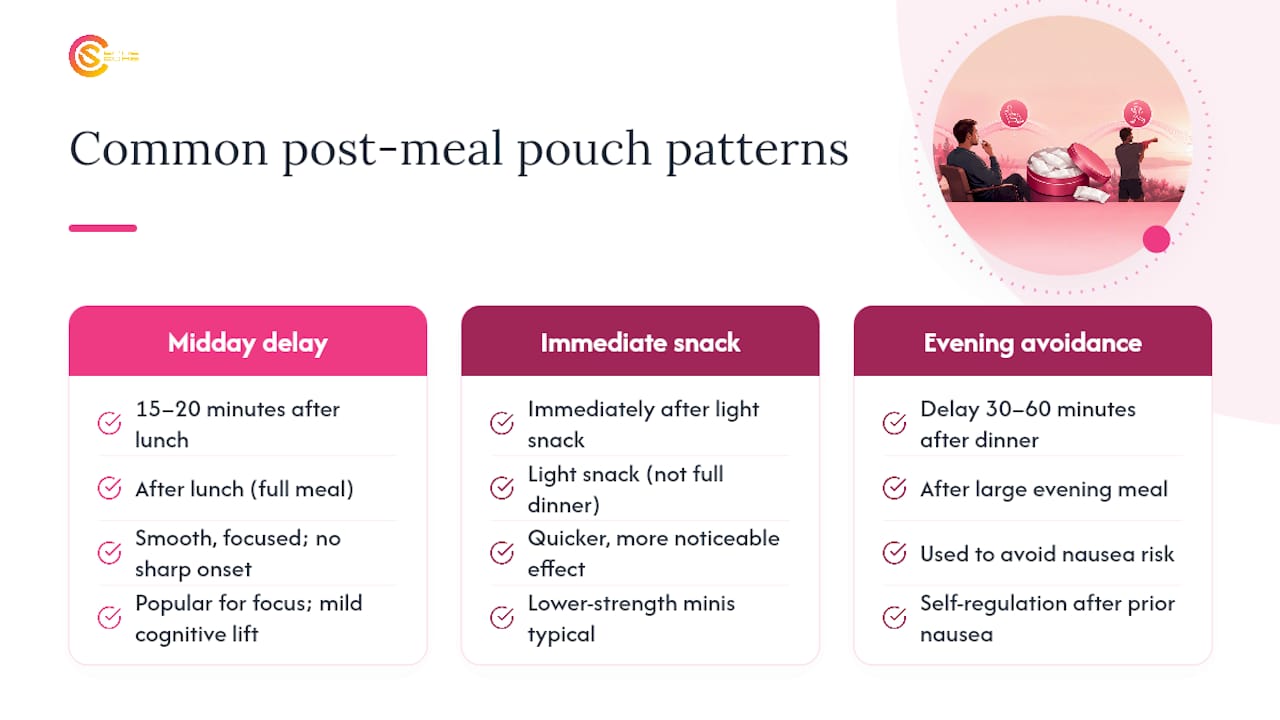
The most common pattern is a midday pouch placed 15–20 minutes after lunch. Users report this timing delivers a smooth, focused effect without the sharp onset that comes from using a pouch on an empty stomach. The post-lunch window is popular for nicotine pouches for focus because the meal has already blunted the post-lunch energy dip, and the pouch adds a mild cognitive lift without the jitteriness of a second coffee.
A second common pattern is immediate post-meal use, usually after a light snack rather than a full dinner. Users who go this route tend to use lower-strength minis and report a quicker, more noticeable effect than they get mid-morning.
The third pattern is deliberate avoidance of pouches for 30–60 minutes after a large evening meal. Users who have experienced nausea from post-meal pouches in the past often self-regulate this way. It is a practical response to the absorption dynamics described earlier.
Nicotine pouches can also affect appetite for some users, with reports of reduced hunger after use. This is worth noting if you are using pouches close to mealtimes and find your appetite changing.
Snuscore carries the formats you need for post-meal use
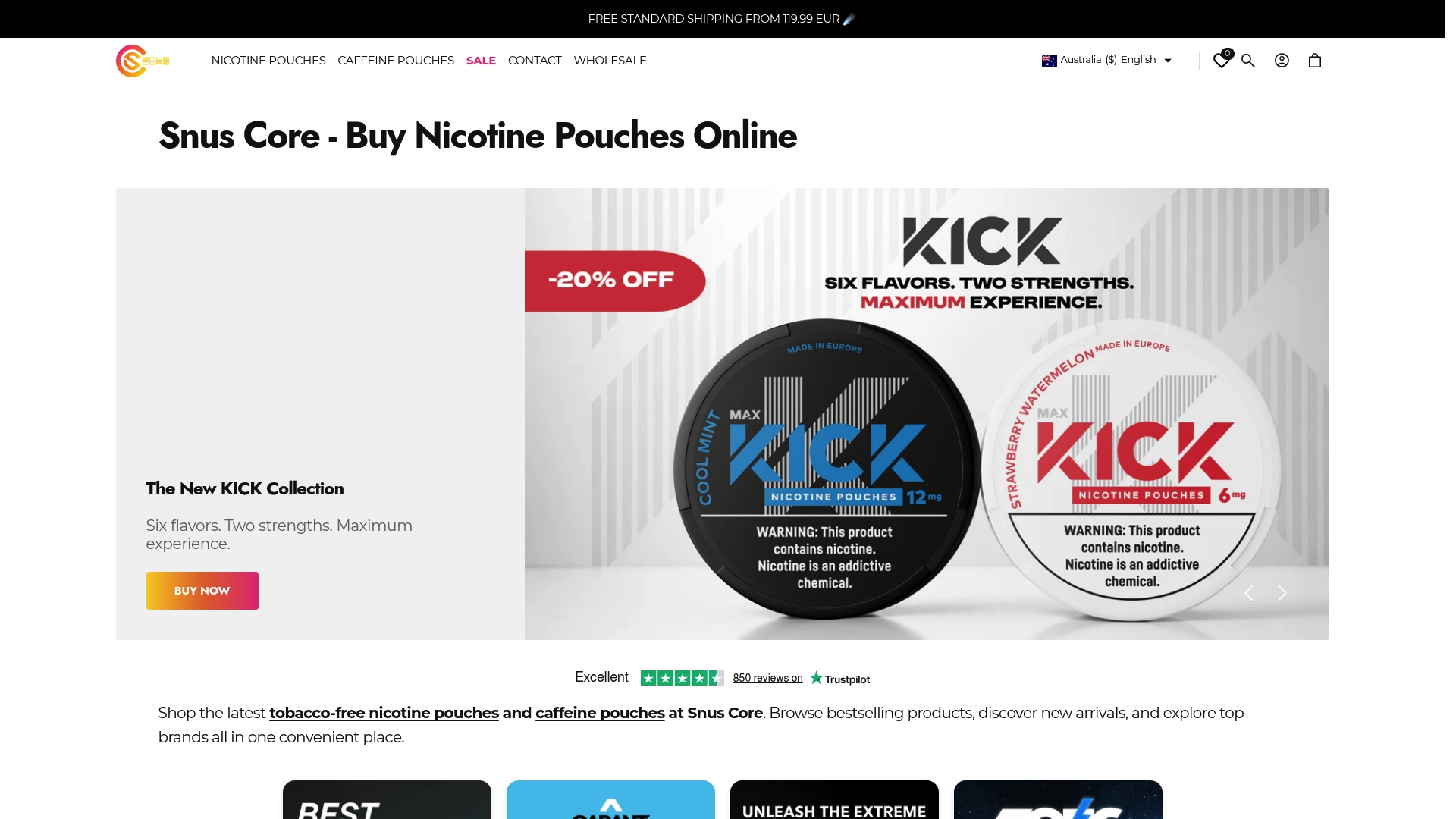
Snuscore is a dedicated reseller of tobacco-free nicotine and caffeine pouches, stocking a broad range of brands, strengths, and formats. For post-meal use specifically, the catalog covers everything from low-strength minis like ZYN Black Cherry Mini 2 to fruit-forward options like KILLA Exclusive Strawberry Watermelon, all available in individual cans so you can sample before buying in volume.
Not sure which strength fits your post-meal routine? The Snuscore team can help. Browse the full assortment at Snuscore or go directly to a product page to check strength, format, and flavor details. If you have questions about fit or want guidance on starting with a lower strength, reach out through the site’s contact options.
Sources
- ELI5: Why do I feel the effects of nicotine more strongly after eating? - Reddit
FAQ
Can you use nicotine pouches right after eating?
Yes. Placing a pouch immediately after a light meal or snack is common and generally safe. After a large meal, waiting 15–30 minutes reduces the risk of a sharper-than-expected effect.
Why do pouches hit harder after eating?
Eating raises saliva production and shifts oral pH upward, which accelerates nicotine absorption through the cheek lining. The effect is stronger and faster than on an empty stomach.
Is 4 pouches a day too many?
Manufacturer guidance varies by product and strength. Some products, like Neutonic’s focus pouches, set a maximum of four per day for their specific formulation. For most standard nicotine pouches, daily limits depend on strength and individual tolerance. Consult the product label and a clinician if you are unsure.
What happens if you swallow a nicotine pouch?
Swallowing one pouch typically causes mild nausea or stomach discomfort in adults. Drink water, stay calm, and call Poison Control at 1-800-222-1222 if symptoms worsen. Keep pouches away from children, for whom the risk is significantly higher.
Recommended
- Are Nicotine Pouches Safe? ➤ The latest news, tips, and insights on nicotine pouches | SnusCore
- Glick Nicotine Pouches: All You Need to Know ➤ The latest news, tips, and insights on nicotine pouches | SnusCore
- How to Use Nicotine Pouches? All You Need to Know ➤ The latest news, tips, and insights on nicotine pouches | SnusCore


