





TL;DR:
- Nicotine pouches pose real health risks, including immediate side effects and potential long-term harm. Their addictive nature, oral tissue damage, and uncertain cancer risk require cautious use, especially in high-risk groups. Long-term safety remains unproven, emphasizing the importance of informed choice and responsible purchasing.
Nicotine pouches are not harmless. They carry real, documented short-term side effects and plausible long-term risks, and the American Cancer Society notes that FDA marketing authorization for certain products does not equal a long-term safety guarantee. The CDC is direct: nicotine is highly addictive, and these products are not safe for youth, pregnant people, or anyone with cardiovascular disease. If you are weighing whether to start, continue, or stop using nicotine pouches, here is what the current evidence actually shows.
Quick summary of known harms:
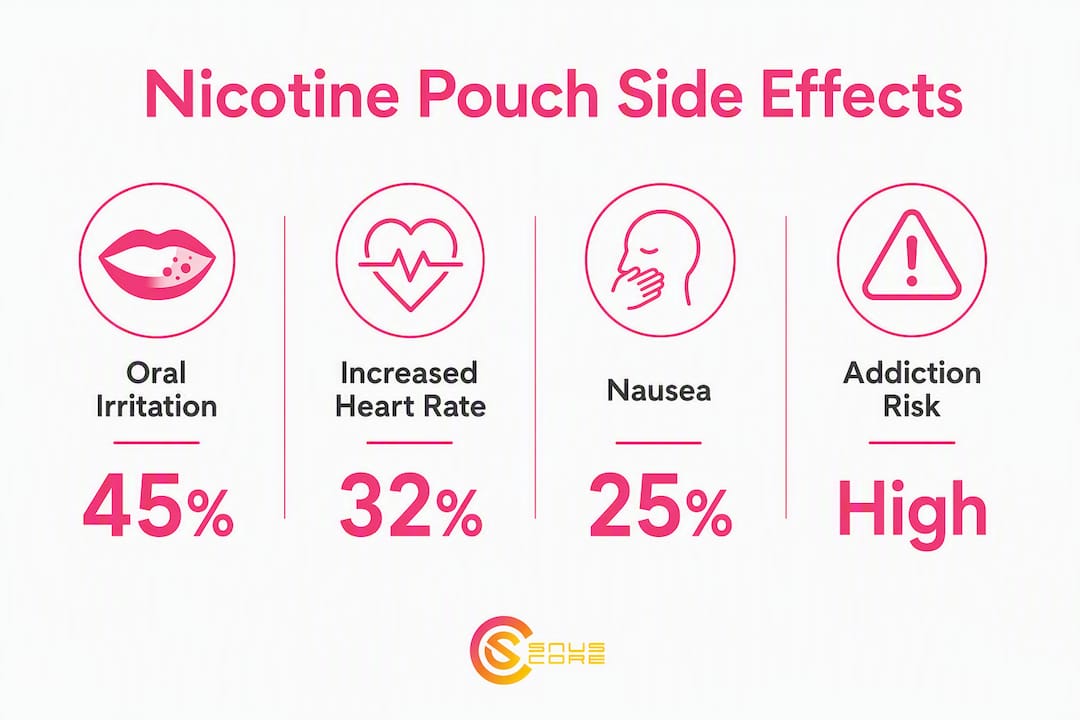
- Immediate effects: oral irritation and burning, nausea, hiccups, headache, dizziness, dry mouth
- Cardiovascular: elevated heart rate and blood pressure with each use
- Oral health: gum recession, localized inflammation, increased cavity risk with regular use
- Long-term cancer risk: uncertain, not ruled out, and under active study
High-risk groups who should avoid these products entirely: pregnant or breastfeeding people, adolescents, and anyone with heart disease or uncontrolled hypertension.
Table of Contents
- What are nicotine pouches and how do people use them?
- What ingredients in a pouch actually drive side effects?
- What are the most common short-term nicotine pouch side effects?
- What do nicotine pouches do to your gums and teeth?
- How does nicotine affect your heart and the rest of your body?
- What are the long-term risks, and does anyone know if pouches cause cancer?
- How addictive are nicotine pouches, and what does withdrawal look like?
- Who should avoid nicotine pouches entirely?
- How do nicotine pouches compare with cigarettes, vaping, and snus?
- What should you do if you experience side effects?
- Key Takeaways
- The evidence is clearer than the marketing suggests
- Buying pouches responsibly if you choose to continue
- Useful sources and further reading
- FAQ
What are nicotine pouches and how do people use them?
Nicotine pouches are small, tobacco-free pouches containing powdered or synthetic nicotine, plant-based fiber, flavorings, pH adjusters, and sweeteners. You place one between your upper lip and gum, where nicotine absorbs directly through the oral mucosa into the bloodstream. No smoking, no chewing, no spitting.
Typical use patterns:
- One pouch held in place for a variable duration
- Multiple pouches used throughout the day, often in smoke-free settings
- Strengths ranging widely across products with variable nicotine per pouch
- Flavors including mint, citrus, berry, and coffee, which can affect perception of strength
In the U.S., the FDA has granted marketing authorizations for certain nicotine pouch products. That process evaluates whether a product is appropriate for public health, not whether it is safe for individual long-term use. Regulators continue to advise caution, and long-term safety data remain incomplete.
What ingredients in a pouch actually drive side effects?
The components most linked to adverse effects are nicotine concentration, pH, and flavoring agents. Understanding these helps explain why two pouches from different brands can feel very different.
Common ingredients and their effects on the body:
- Nicotine: The primary driver of cardiovascular stress, addiction, and systemic stimulant effects
- pH adjusters (alkaline agents): Raise the pouch’s pH to a median of approximately 8.8, which increases the proportion of unionized nicotine and speeds oral absorption, intensifying both the effect and local mucosal irritation
- Flavorings: Can mask the harshness of high-nicotine products and may independently irritate oral tissue with prolonged contact
- Plant fibers and binders: Generally inert, but contribute to the physical pressure and moisture at the placement site
- Sweeteners: Low direct risk, though they may contribute to cavity risk with frequent use
Nicotine content varies widely across brands, with inconsistent labeling across the market. That range matters: a pouch at the high end delivers a nicotine dose that can cause acute toxicity symptoms in someone with low tolerance.
Pro Tip: When choosing a pouch, look for products with explicit mg-per-pouch labeling rather than vague “strength” descriptors. Lower nicotine and transparent labeling reduce acute side-effect risk, especially for new users.
What are the most common short-term nicotine pouch side effects?
The American Cancer Society lists the most frequently reported immediate side effects as nausea, hiccups, headaches, dizziness, dry mouth, and sore or burning sensations in the mouth. Most are dose-dependent and tend to be more pronounced in new users or when switching to stronger products.
Common short-term effects:
- Burning or soreness at the placement site (most common)
- Hiccups, particularly in the first few minutes of use
- Nausea and upset stomach, especially if the pouch is accidentally swallowed
- Headache and dizziness from rapid nicotine absorption
- Dry mouth from reduced salivary flow
- Elevated heart rate and a sense of lightheadedness
The mechanism behind most of these is straightforward. Nicotine is a stimulant that activates the sympathetic nervous system, raising heart rate and blood pressure almost immediately. The alkaline pH of most pouches accelerates that absorption. Local irritation comes from direct, sustained contact between the pouch and the oral mucosa, compounded by flavoring agents and pH adjusters.
Most users report these effects as minor and transient, particularly after the first few uses. That said, severity scales with dose, and someone using a 15–20 mg pouch for the first time may experience effects closer to acute nicotine toxicity than a mild buzz.
What do nicotine pouches do to your gums and teeth?
Oral health is where the most consistent clinical concern sits. University of Utah Health identifies gum irritation, localized inflammation, gum recession, and increased risk of tooth decay and potential tooth loss as documented complications of regular pouch use.

The mechanism is specific. Nicotine damages oral fibroblasts, the cells responsible for maintaining gum tissue integrity. Chronic placement of a pouch against the same spot accelerates tissue destruction at that site, which is why gum recession tends to appear precisely where users habitually place their pouches.
Additional oral risks include:
- Localized lesions or white patches at the contact site
- Gingivitis from sustained chemical irritation
- Increased cavity risk, particularly with flavored or sweetened products
- Dry mouth reducing saliva’s natural protective function
Pro Tip: Rotate the placement site with each pouch rather than using the same spot repeatedly. This reduces the concentration of tissue damage and gives irritated gum tissue time to recover.
If you notice persistent soreness, visible recession, white patches, or any tissue change that does not resolve within two weeks of stopping use, see a dentist. These are not cosmetic concerns. Early intervention limits long-term damage.
How does nicotine affect your heart and the rest of your body?
Every pouch delivers a dose of nicotine that triggers an immediate cardiovascular response. The American Cancer Society confirms that nicotine causes elevated heart rate and increased blood pressure, raising the risk profile for anyone with pre-existing cardiovascular conditions.
Systemic effects beyond the mouth include:
- Vasoconstriction, reducing blood flow to peripheral tissues
- Increased cardiac workload with each use
- Potential contribution to vascular stiffness and atherosclerosis with sustained, long-term use
- Sleep disruption, particularly with evening use
- Mood and anxiety changes, including irritability between uses as nicotine levels drop
- Fetal harm in pregnancy: nicotine crosses the placenta and disrupts fetal brain and cardiovascular development
Pro Tip: If you have diagnosed heart disease, uncontrolled high blood pressure, or a history of stroke, consult your cardiologist before using any nicotine product, including pouches. The cardiovascular load is real and immediate.
Seek urgent care if you experience: severe chest pain, irregular heartbeat, difficulty breathing, or seizures after using a nicotine pouch. These are red flags, not side effects to wait out.

What are the long-term risks, and does anyone know if pouches cause cancer?
This is the most honest answer available right now: long-term cancer risk from nicotine pouches is uncertain, not ruled out.
Some pouches have tested positive for tobacco-specific nitrosamines (TSNAs), formaldehyde, chromium, and other trace contaminants, though levels and presence vary significantly between products and batches. A BfR (German Federal Institute for Risk Assessment) assessment confirmed this variability. The absence of combustion means pouches avoid the hundreds of carcinogens generated by burning tobacco, but that does not make them carcinogen-free.
The core uncertainty: Cancer typically takes decades to develop. Nicotine pouches have only been widely used for a few years. Existing studies are short in follow-up, small in sample size, and inconsistent in methodology. Chronic oral irritation from sustained pouch placement is a biologically plausible pathway to cellular changes, but no longitudinal study has yet confirmed a causal link to oral cancer. The absence of evidence is not evidence of absence.
| Risk area | Current evidence | Confidence level |
|---|---|---|
| Oral irritation and gum recession | Well-documented in clinical reports | High |
| Cardiovascular stress (acute) | Confirmed by multiple studies | High |
| Trace carcinogens in some products | Detected in lab testing (BfR, Frontiers) | Moderate |
| Long-term oral cancer risk | Biologically plausible, not yet confirmed | Low/Uncertain |
| Systemic cancer risk | Insufficient data | Very low/Unknown |
A Cochrane review found that short-term clinical studies did not identify serious harms in small samples, but concluded the evidence is too sparse to confirm long-term safety. Monitor updates from the CDC, FDA, and peer-reviewed longitudinal studies as this evidence base develops.
How addictive are nicotine pouches, and what does withdrawal look like?
Nicotine is one of the most addictive substances in common use. Dependence can develop quickly, particularly in people who have never used nicotine before or in younger adults whose brains are still developing. The CDC is explicit on this point.
On the “how many pouches equals a cigarette” question: there is no fixed answer, and anyone offering one is oversimplifying. A cigarette delivers roughly 1–2 mg of absorbed nicotine. A nicotine pouch can contain anywhere from 1 mg to 47 mg total, with absorption influenced by pH, contact time, and individual physiology. A 4 mg pouch at pH 8.8 may deliver absorbed nicotine comparable to one cigarette; a 20 mg pouch used for an hour could deliver considerably more. The variability in labeling and formulation makes per-pouch dosing estimates unreliable without lab confirmation.
Withdrawal symptoms when stopping:
- Strong cravings, typically peaking within 24–72 hours of last use
- Irritability, anxiety, and difficulty concentrating
- Headaches and mild dizziness
- Increased appetite and sleep disruption
- Depressed mood in the first 1–2 weeks
Withdrawal duration varies. Acute symptoms usually peak in the first 3–5 days and largely resolve within 2–4 weeks for most people, though cravings can persist longer. FDA-approved nicotine replacement therapies (NRTs), including patches, gum, and lozenges, reduce withdrawal severity. Behavioral support through the national quitline (1-800-QUIT-NOW) is free and evidence-based. For a direct comparison of pouches versus pharmaceutical NRTs, see nicotine pouches vs. patches.
Who should avoid nicotine pouches entirely?
Some groups face disproportionate harm from nicotine exposure at any dose.
- Pregnant and breastfeeding people: Nicotine crosses the placenta and enters breast milk, disrupting fetal brain development, increasing risk of preterm birth, and affecting infant cardiovascular function.
- Adolescents and young adults (under 25): The brain continues developing until the mid-20s. Nicotine exposure during this period alters reward circuitry, increases addiction vulnerability, and is linked to attention and impulse-control problems.
- People with cardiovascular disease: Elevated heart rate and blood pressure with each use create direct cardiac risk for anyone with coronary artery disease, arrhythmias, or uncontrolled hypertension.
- Children and pets: Nicotine pouches are an acute poisoning risk if swallowed. The BfR has documented cases of accidental ingestion with symptoms including nausea, vomiting, sweating, and in severe cases more serious effects. Store pouches out of reach.
The CDC and public health authorities are consistent on this point. If you are not currently a nicotine user, these products offer no benefit that outweighs the risks.
How do nicotine pouches compare with cigarettes, vaping, and snus?
Nicotine pouches sit in a harm hierarchy, but their position is not as clean as some marketing implies.
Key differences by product type:
- Cigarettes: Combustion generates hundreds of confirmed carcinogens and toxicants. Pouches avoid combustion entirely, which is a meaningful difference in exposure profile.
- Vaping/e-cigarettes: Also avoids combustion, but delivers nicotine via aerosol with its own set of respiratory concerns. Pouches avoid inhalation entirely.
- Snus (moist oral tobacco): Contains tobacco leaf and higher levels of TSNAs than most pouches. Pouches generally show lower TSNA levels, though product variability complicates direct comparison.
- Pharmaceutical NRTs (patches, gum, lozenges): Regulated as medicines, with standardized dosing, quality control, and clinical evidence for cessation. Pouches are regulated as tobacco products, not medicines, with less rigorous quality standards.
| Product | Combustion exposure | Oral tissue contact | Regulatory/quality standard |
|---|---|---|---|
| Cigarettes | High | None | Tobacco regulation |
| Vaping | None | None | Tobacco regulation (variable) |
| Snus | None | Direct, sustained | Tobacco regulation |
| Nicotine pouches | None | Direct, sustained | Tobacco regulation |
| NRT (patch/gum/lozenge) | None | Minimal to moderate | Pharmaceutical (FDA-approved) |
For a detailed side-by-side of pouches versus gum specifically, nicotine pouches vs. gum covers the absorption and cessation differences in depth.
While pouches likely carry a lower combustion-toxicant burden than cigarettes, the presence of variable contaminants and inconsistent product quality means they should not be treated as safe alternatives. They are a different risk profile, not a risk-free one.
What should you do if you experience side effects?
For common, mild side effects (burning, nausea, hiccups):
- Remove the pouch immediately.
- Rinse your mouth with water.
- Wait and monitor; most acute symptoms resolve within 30 minutes.
- Switch to a lower-nicotine product or reduce frequency of use.
- If nausea or dizziness persists, avoid further use that day.
Red flags requiring urgent medical attention:
- Severe chest pain or palpitations
- Difficulty breathing
- Seizures or loss of consciousness
- Suspected ingestion by a child (call Poison Control: 1-800-222-1222 immediately)
For oral symptoms, see a dentist if you notice persistent soreness lasting more than two weeks, visible gum recession, white or red patches, or any tissue change at the placement site. These warrant professional evaluation.
Pro Tip: If you want to reduce harm while continuing to use pouches, choose products with explicit mg-per-pouch labeling, rotate placement sites, maintain regular dental checkups, and stay below the lowest effective dose for your needs.
Cessation resources:
- National Quitline: 1-800-QUIT-NOW (free, available in all 50 states)
- FDA-approved NRTs: nicotine patches, gum, lozenges (over-the-counter); varenicline and bupropion (prescription)
- Smokefree.gov for digital behavioral support tools
Key Takeaways
Nicotine pouches carry documented short-term side effects and plausible long-term risks, with cancer risk remaining uncertain due to limited long-term data.
| Point | Details |
|---|---|
| Immediate side effects are real | Oral irritation, nausea, hiccups, and elevated heart rate are the most commonly reported effects. |
| Oral health risk is well-documented | Gum recession, inflammation, and tissue damage occur at the placement site with regular use. |
| Long-term cancer risk is uncertain | Some products contain trace carcinogens; no longitudinal study has confirmed or ruled out oral cancer risk. |
| High-risk groups must avoid pouches | Pregnant people, adolescents, and those with cardiovascular disease face disproportionate harm. |
| Snuscore offers transparent product options | Snuscore stocks products with explicit nicotine labeling; check product pages for mg-per-pouch details before buying. |
The evidence is clearer than the marketing suggests
The standard framing around nicotine pouches, that they are a “cleaner” or “safer” alternative, is partly true and partly a gap in the data being mistaken for reassurance. Fewer combustion toxicants is a real and meaningful difference from cigarettes. But “fewer known carcinogens than a cigarette” is a low bar, and the product category is too new for anyone to make confident claims about long-term oral cancer risk.
What the evidence does support clearly: these products cause local oral tissue damage with regular use, they deliver an addictive substance at doses that vary widely and are often poorly labeled, and they carry immediate cardiovascular effects that matter for anyone with heart disease. Those are not hypothetical risks.
The more useful question for most adults is not “are pouches safe?” but “safe compared to what, and for how long?” For a current smoker trying to quit, the combustion-toxicant reduction is a real benefit worth weighing. For a non-user, there is no benefit side of that equation at all.
Snuscore’s position as a reseller, not a manufacturer, means the products on the site come from established brands with published specifications. That does not make any pouch medically approved or long-term safe. It means you can read the label, compare the nicotine content, and make an informed choice. That is the most honest framing available right now.
Buying pouches responsibly if you choose to continue
If you have read the evidence and still choose to use nicotine pouches, buying from a seller with clear product information reduces one layer of risk.

Snuscore is an online retailer, not a manufacturer. The catalog includes products with explicit nicotine-per-pouch labeling, a range of strengths from low to high, and product pages that list ingredients and specifications. For users focused on harm reduction, lower-nicotine options like Lundgrens Höståker offer a well-documented product with clear labeling. The Glick Citrine Grape Hazard Series is a popular flavored option with published strength details. Snuscore also stocks XQS Tropical Caffeine Pouches for those interested in caffeine-based alternatives without nicotine.
Check the product page for mg-per-pouch content before purchasing. Avoid vendors with no ingredient disclosure. If you are reducing nicotine intake, step down gradually rather than stopping abruptly to manage withdrawal.
Useful sources and further reading
The following sources were used in preparing this article. Long-term evidence on nicotine pouches is still developing; check these sources for updates.
- CDC: Nicotine Pouches
- American Cancer Society: What to Know About Nicotine Pouches and Cancer Risk
- BfR: Health Risk Assessment of Nicotine Pouches
- Cochrane: Oral Nicotine Pouches for Smoking Cessation
- Frontiers in Public Health: Nicotine Pouches Narrative Review (2025)
- University of Utah Health: Known and Unknown Health Risks of Oral Nicotine Pouches
- VA Mental Health: Oral Nicotine Pouches Provider Guide
| Source | Type | Key contribution |
|---|---|---|
| CDC | Government public health | High-risk groups, addiction warning |
| American Cancer Society | Nonprofit health authority | Side effects list, cardiovascular risk, regulatory context |
| BfR | Government risk assessment | Contaminant detection, acute toxicity cases |
| Cochrane | Systematic review body | Evidence quality assessment, cessation data |
| Frontiers in Public Health (2025) | Peer-reviewed journal | Nicotine range, pH data, chemical variability |
| University of Utah Health | Academic medical center | Oral tissue damage mechanisms |
This article provides general health information, not medical advice. Consult a qualified clinician or your dentist for guidance specific to your situation, and check the CDC and FDA for the most current regulatory updates.
FAQ
What are the long-term effects of nicotine pouches?
Long-term effects are not yet fully established due to limited follow-up data. Known ongoing risks include gum recession, oral tissue damage, cardiovascular strain, and nicotine dependence; cancer risk remains uncertain but is under study.
How do you stop using nicotine pouches?
Reduce nicotine strength gradually before stopping, use FDA-approved NRTs (patches, gum, or lozenges) to manage withdrawal, and contact the national quitline at 1-800-QUIT-NOW for free behavioral support.
How many ZYN pouches equal one cigarette?
There is no fixed equivalence. A cigarette delivers roughly 1–2 mg of absorbed nicotine; a pouch can contain 1–47 mg total, with absorption varying by pH and contact time. A standard 4 mg pouch may approximate one cigarette in absorbed dose, but higher-strength pouches can deliver significantly more.
How long does nicotine pouch withdrawal last?
Acute withdrawal symptoms, including cravings, irritability, and headaches, typically peak within 24–72 hours and largely resolve within 2–4 weeks. Cravings can persist beyond that period, particularly without cessation support.
Do nicotine pouches cause cancer?
Current evidence does not confirm a causal link, but it does not rule one out. Some products contain trace carcinogens including TSNAs and formaldehyde. Long-term studies are lacking, and chronic oral irritation is a biologically plausible pathway to cellular changes over time.
Recommended
- Glick Nicotine Pouches: All You Need to Know ➤ The latest news, tips, and insights on nicotine pouches | SnusCore
- Are Nicotine Pouches Safe? ➤ The latest news, tips, and insights on nicotine pouches | SnusCore
- How to Use Nicotine Pouches? All You Need to Know ➤ The latest news, tips, and insights on nicotine pouches | SnusCore
- Velo Snus and Nicotine Pouches: What You Need To Know ➤ The latest news, tips, and insights on nicotine pouches | SnusCore


