




Snus contains tobacco leaf. Nicotine pouches don’t. That single fact drives almost every other difference between the two products, from tooth staining to legal status to what shows up in a lab analysis of the pouch itself.
For adults choosing between them, the practical takeaway is straightforward: if you want nicotine without tobacco-specific exposures or the yellowing that comes with tobacco leaf, tobacco-free pouches are usually the better fit. If you already use Swedish snus and value its traditional flavor profile or the decades of population data behind it, there’s no urgent health reason to switch. Neither product is risk-free. Both deliver an addictive dose of nicotine through the lining of your mouth, and Health Canada’s guidance on authorized nicotine pouches makes that explicit, recommending no more than 15 pouches a day and a maximum of 60 minutes per pouch.
Here’s what separates the two at a glance:
- Snus: made from tobacco leaf, water, salt, and flavoring; pasteurized, not fermented; carries tobacco-specific nitrosamines (TSNAs)
- Nicotine pouches: tobacco-free; built on a cellulose or fiber base with nicotine (plant-derived or synthetic), flavorings, and pH adjusters
- Shared traits: both sit under the upper lip, both are largely spit-free, both deliver nicotine through oral mucosa
| Feature | Snus | Nicotine Pouches |
|---|---|---|
| Tobacco content | Yes | No |
| Tooth staining risk | Moderate to high | Low to none (white pouches) |
| Long-term research base | Decades of Swedish data | Growing but limited |
| Legal availability | Restricted in most of EU outside Sweden | Widely available, rules vary by country |
Key Takeaways
Snus contains tobacco leaf and its associated TSNAs, while nicotine pouches are tobacco-free but still deliver an addictive dose of nicotine, and the right choice depends on your goal, tolerance, and local laws.
| Point | Details |
|---|---|
| Core distinction | Snus contains tobacco leaf; nicotine pouches use a cellulose base with no tobacco. |
| Health trade-off | Pouches cut tobacco-specific exposure, but nicotine dependence and cardiovascular concerns remain for both. |
| Match your strength | Pouch mg per unit varies widely (roughly 5 to 20 mg, sometimes more), so check labels before switching. |
| Confirm legality first | Snus is banned across most of the EU outside Sweden; pouch rules vary by country and are changing. |
| Where to compare options | Snuscore stocks tobacco-free pouches like ZYN Citrus Mini 2 and XQS Fruzzle Strong for adults ready to switch. |
Table of Contents
- Nicotine Pouches vs Snus: What Actually Distinguishes Them
- How Do Nicotine Pouches and Snus Compare Side by Side?
- What Do Health Authorities Say About the Risks?
- Where Are Snus and Nicotine Pouches Legal to Buy?
- What’s Different Day to Day: Taste, Staining, and Storage
- How Should You Decide Between Snus and Nicotine Pouches?
- Which Product Wins for Which Type of User?
- Sources
- FAQ
Nicotine Pouches vs Snus: What Actually Distinguishes Them
The confusion starts with the name. Snus is a Swedish word, and outside Scandinavia, people often use it loosely to describe any pouch you tuck under your lip. That’s inaccurate, and it matters for anyone comparing health data or legal status.
Snus is a moist, oral tobacco product, sold either loose or pre-portioned into small pouches. According to a Philip Morris International breakdown of oral nicotine products, snus is made from ground tobacco leaf mixed with water, salt, and flavoring, then pasteurized rather than fermented, which is a key production difference from older-style moist snuff. You place it under your upper lip, where it releases nicotine and tobacco compounds over the course of use.
Nicotine pouches skip the tobacco leaf entirely. The pouch material is typically plant fiber or cellulose, filled with nicotine that’s either extracted from tobacco plants or produced synthetically, along with flavorings, sweeteners, and pH-balancing agents that help nicotine absorb through your cheek and gum tissue. The CDC’s overview of nicotine pouches confirms the format: small fiber pouches, no tobacco leaf, no spitting required, absorbed directly through the mouth’s lining.
Both formats share a use pattern that longtime snus users will recognize immediately:
- Placed under the upper lip, not chewed or swallowed
- No combustion, no smoke, generally no spitting
- Discarded after use, typically within 30 to 60 minutes
- Available in a range of strengths and flavors
Where they diverge is what’s actually inside. Snus carries the compounds naturally present in cured tobacco leaf, including TSNAs. Nicotine pouches, being tobacco-free, don’t carry that specific chemical baggage, though they still deliver nicotine and their own additive profile.
How Do Nicotine Pouches and Snus Compare Side by Side?
Once you understand the core distinction, the rest comes down to details that affect daily use. The table below lines up the factors that matter most to someone deciding which product to buy.
| Factor | Snus | Nicotine Pouches |
|---|---|---|
| Tobacco content | Contains tobacco leaf | Tobacco-free |
| Nicotine strength | Typically 8 to 15 mg per pouch | Commonly 5 to 20 mg per pouch, with some products exceeding 30 mg |
| Delivery speed | Steady release over 20 to 60 minutes | Similar range; can feel faster in drier, higher-pH formulas |
| Harmful constituents | Contains TSNAs from tobacco curing | No TSNAs; contains synthetic or extracted nicotine plus fillers |
| Mouthfeel | Moist, more saliva production | Drier, often described as less “juicy” |
| Staining risk | Moderate to noticeable over time | Minimal, especially with white pouches |
| Shelf life | Shorter, often needs refrigeration | Longer, stable at room temperature |
| Flavor range | Traditional (mint, wintergreen, bergamot) | Broad, from citrus to dessert profiles |
| Regulatory treatment | Often classed as tobacco product; banned in most EU states outside Sweden | Frequently a separate consumer-product category |
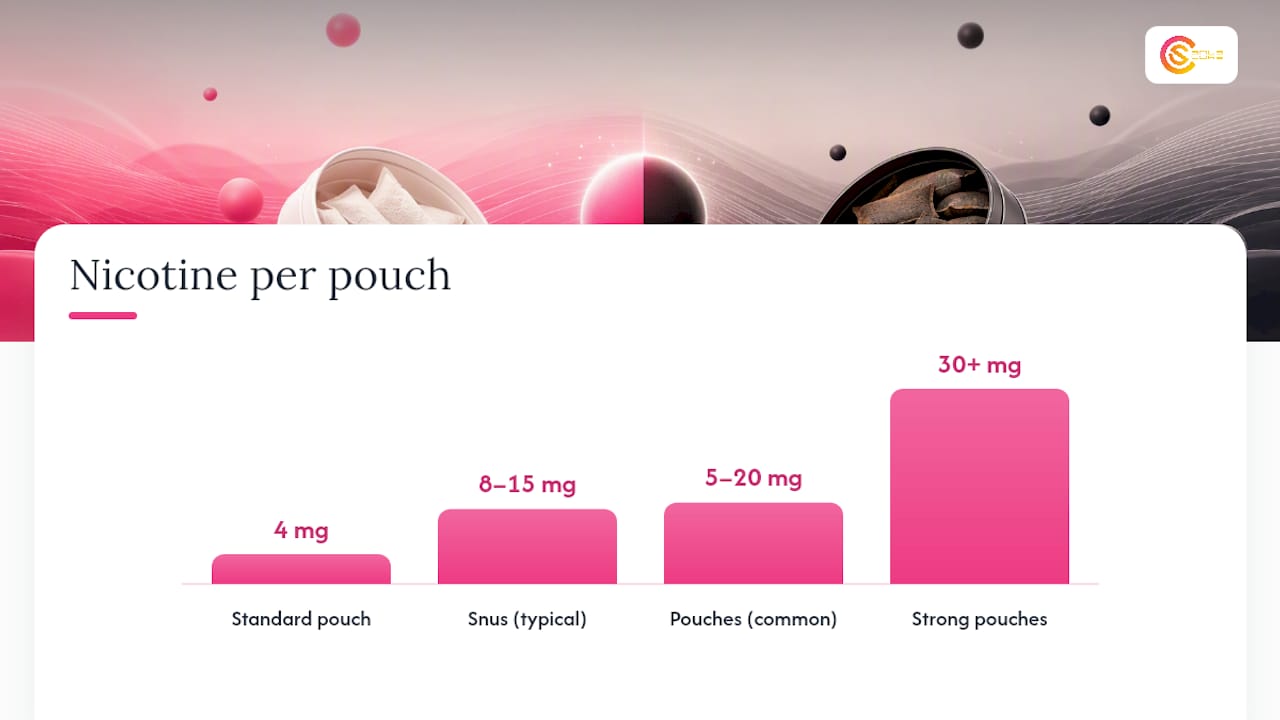
The ASH Scotland briefing on nicotine pouches notes that pouch nicotine content commonly falls between 5 and 20 mg, though stronger products in the 30 mg-plus range have appeared in some markets. That’s a wider spread than most traditional snus, where 8 to 15 mg per pouch is the norm.
Cigarette-equivalence numbers get thrown around a lot, and it helps to see one grounded example rather than a vague comparison.
| Product Example | Nicotine Content | Rough Cigarette Equivalence |
|---|---|---|
| Standard nicotine pouch | 4 mg | Roughly the nicotine inhaled from four cigarettes |
That figure comes from MyHealth Alberta’s guidance on nicotine pouches, which frames a 4 mg pouch as delivering nicotine comparable to about four cigarettes. Treat that as a rough guide, not a precise conversion. Absorption depends on your saliva pH, how long you keep the pouch in, and even what you drank beforehand.
A few practical implications fall out of this table immediately:
- Nicotine strength varies more within the pouch category than within snus, so check the mg label every time you switch brands.
- TSNA exposure is a snus-specific concern; pouches remove that variable but not nicotine dependence.
- Shelf life favors pouches if you buy in bulk, since snus often needs cold storage to stay fresh.
What Do Health Authorities Say About the Risks?
Both products keep you dependent on nicotine. That’s the uncomfortable baseline fact neither format escapes. Removing tobacco leaf cuts out some tobacco-specific exposures, but it doesn’t erase the addictive pull of nicotine itself, and it doesn’t guarantee a clean safety profile.
The evidence base looks different for each product, and that gap matters. Swedish snus has decades of population-level data behind it. A 2025 synthesis comparing snus and nicotine pouches points out that snus use in Sweden correlates with lower smoking rates and reduced smoking-related mortality compared to other European countries where snus isn’t widely used. Nicotine pouches, by contrast, are newer to the market. Early studies suggest smokers who switch to pouches reduce their exposure to combustion-related toxicants, but the long-term picture simply doesn’t exist yet the way it does for snus.
Nicotine strength callout: Pouch nicotine content typically runs 5 to 20 mg per pouch, according to ASH Scotland, though products above 30 mg have surfaced in some markets. That’s a wide enough range that two pouches from different brands can deliver very different doses.
Both products carry real risks worth taking seriously:
- Nicotine dependence, regardless of tobacco content
- Cardiovascular strain, a concern flagged for both product categories
- Oral irritation, gum recession, or tissue changes with regular use
- Elevated risk for pregnant people and youth, for whom neither product is appropriate
WebMD’s overview of nicotine pouches echoes this, noting that pouches aren’t recommended for non-users, youth, or pregnant people, and that oral irritation is a common early side effect. That mirrors long-standing guidance around snus.
Canadian guidance gets specific about safe use limits. Authorized nicotine pouches should be used one at a time, left under the lip for up to 60 minutes, with a daily maximum of 15 pouches. Exceeding that isn’t a minor guideline violation, it raises your risk of nicotine toxicity, which can show up as nausea, dizziness, or a racing heart.
Pro Tip: If a pouch causes burning or tingling under your lip, that’s usually the drier fiber base at work, not a sign you’re using it wrong. Switching to a milder flavor or a lower mg strength for your first few weeks usually solves it.
Where Are Snus and Nicotine Pouches Legal to Buy?
Legal status is the single most confusing part of this comparison, because it changes by country and sometimes by region within a country. Snus faces a specific hurdle: it’s banned across most of the European Union, with Sweden holding a historic exemption negotiated when it joined the EU. Nicotine pouches usually dodge that particular ban because they’re tobacco-free, but that doesn’t mean they’re unregulated. Many countries are actively writing new rules for pouches right now, which means today’s answer might not hold in a year.
Before buying or traveling with either product, check these four things:
- Local age limits — most jurisdictions restrict sales to adults, but the minimum age varies.
- Import allowances — some countries cap how many pouches or how much tobacco you can bring in personally.
- Nicotine-strength caps — a handful of markets limit maximum mg per pouch, so a product legal at home might exceed local limits elsewhere.
- Pending regulatory changes — the UK, for example, has regulatory updates affecting pouches taking shape going into 2026, and rules can shift with little notice.
If you’re traveling or shopping across borders, country-specific guidance saves you a headache. Snuscore has covered market rules for Germany, the Czech Republic, the UK, Slovenia, Austria, and Portugal, among others.
One pattern holds up almost everywhere outside Sweden: nicotine pouches are simply easier to find. Because they’re not classified as tobacco products in most countries, they avoid tobacco-specific advertising restrictions, tax structures, and sales limits that keep traditional snus off shelves. That’s a big reason pouches have expanded so quickly into markets where snus never had a foothold, including much of North America.
What’s Different Day to Day: Taste, Staining, and Storage
The health data matters, but so does what happens the moment the product is in your mouth. This is where a lot of switchers form their real opinion, often within the first week.

White pouches, the dominant style for tobacco-free nicotine products, don’t stain teeth the way tobacco-based snus can over months of regular use. That’s a direct function of the tobacco leaf itself. Brown, moist tobacco pigments transfer to enamel gradually, while the cellulose-based white pouch material doesn’t carry the same staining compounds. Snuscore has a deeper look at this in its guide to staining from pouches and snus, if you want to see how it plays out over time.
Beyond staining, a SnusFriend comparison of the two categories lays out several other everyday differences worth knowing before you buy:
- Moisture and mouthfeel: snus tends to be wetter, producing more saliva and a heavier feel; pouches run drier and lighter.
- Shelf life: snus often needs refrigeration and has a shorter usable window; pouches store at room temperature for much longer.
- Flavor range: pouches come in a far broader spread, from tropical fruit blends to coffee and dessert profiles, while snus sticks closer to traditional mint, wintergreen, and bergamot.
- Discretion: white pouches are less visible against teeth and gums and produce less noticeable odor than tobacco-based snus.
- Price and packaging: pouches are typically sold in smaller, more portable cans with a wider price spread across strength tiers.
Environmental impact is worth a quick mention too. Both products generate waste in the form of used pouches and packaging, and neither is fully biodegradable in typical disposal conditions. Cellulose-based pouch material breaks down somewhat faster than treated tobacco leaf, but disposing of either in regular trash rather than flushing or littering remains the responsible move either way.
Pro Tip: If you’re switching from snus to pouches, start one or two strength tiers below what you think you need. The drier pouch base can make the same mg number feel more intense at first, and dialing down for a week or two makes the transition easier on your gums.
How Should You Decide Between Snus and Nicotine Pouches?
Start with one question: are you trying to reduce harm from smoking, replace a snus habit without the tobacco leaf, or just want something discreet and flavorful? Your answer points to a clear match. If harm reduction from cigarettes is the goal, either format works, but tobacco-free pouches remove tobacco-specific exposures on top of removing combustion. If you’re a longtime snus user who values that specific tobacco flavor and doesn’t mind the staining, there’s no strong health argument forcing a switch.
Work through this checklist before you commit to either format:
- Define your goal. Quitting cigarettes, replacing snus, or simply want a smokeless nicotine option? Your goal shapes everything else.
- Match nicotine strength. If you’re used to a 10 mg snus pouch, don’t grab a 20 mg nicotine pouch on your first try. Check labels carefully, since pouch strengths vary more widely.
- Assess your oral sensitivity. If you’ve had gum irritation before, start with a lower mg pouch and a milder flavor.
- Check your local laws. Confirm age limits, import rules, and nicotine caps for wherever you live or plan to travel.
- Try a variety pack first. Sampling a few flavors and strengths before committing to a full case saves money and frustration.
Certain situations call for stepping back entirely, not just switching products:
- Pregnancy: neither snus nor nicotine pouches are appropriate; nicotine crosses the placenta regardless of tobacco content.
- Existing cardiovascular disease: talk to a doctor before using either product, since both raise heart rate and blood pressure.
- Anyone under the legal age: neither product is intended for youth, and nicotine affects a developing brain more severely than an adult one.
If you’re weighing pouches against something other than snus, like nicotine gum, the comparison shifts slightly. Snuscore’s breakdown of nicotine pouches vs. gum covers that ground if cessation aids are part of your decision.
Pro Tip: When switching strength systems between brands, don’t trust “light,” “regular,” or “strong” labels alone; they aren’t standardized across manufacturers. Check the actual mg-per-pouch number every time.
Which Product Wins for Which Type of User?
Neither product deserves a blanket recommendation, because the “better” choice depends entirely on what you’re optimizing for. If you’re coming from cigarettes and want the biggest reduction in tobacco-specific exposure, tobacco-free nicotine pouches are the stronger starting point. If you’re an established snus user who values the traditional flavor and has used it for years without issue, there’s no compelling health data demanding you switch formats.
- Best for harm-reduction seekers: tobacco-free nicotine pouches, since they cut tobacco-specific exposures on top of removing combustion.
- Best for traditional snus users: snus, if the flavor and ritual matter more than eliminating tobacco leaf entirely.
- Best for convenience and discretion: nicotine pouches, thanks to longer shelf life, no staining, and a wider flavor range.
None of this changes the baseline fact: no nicotine product is risk-free, and quitting nicotine altogether remains the healthiest long-term option for anyone able to manage that transition.
A Reseller’s View on Adult Choice
We built Snuscore around a simple belief: adults deserve accurate information and a genuine range of tobacco-free options, not a single default product pushed at them. As a reseller rather than a manufacturer, we don’t have a stake in convincing you that one brand or flavor beats another on paper. Our job is stocking a wide catalog, keeping strength and flavor details accurate on every product page, and giving beginners enough context to avoid picking a pouch that’s too strong or too mild for what they actually need. That’s also why we lean on public-health sources like Health Canada and the CDC when explaining risk, rather than marketing language borrowed from any single brand.
If You Prefer Tobacco-Free Pouches: Where to Compare and Buy
Snuscore doesn’t manufacture nicotine pouches. We’re a reseller, which means our job is curating a wide catalog of tobacco-free options across brands, flavors, and strengths, so you can compare real products instead of guessing from marketing copy.
If you’re coming from snus and want a fruit-forward, higher-strength option, XQS Fruzzle Strong and the ZONE No25 Berry Blast Ultra are two of our most popular strong picks. For something milder while you get used to the format, Paz Light Berry Frost is a gentler entry point. Readers who want a flavor closer to traditional snus might try Lundgrens Höståker, while ZYN Citrus Mini 2 and ZYN Peach Mini 2 cover two of the most requested fruit profiles in a compact mini format. If you want something smooth but still full-strength, check KICK MAX Smooth Strong, and for a limited seasonal option, XQS Tropical Limited Edition Strong rounds out the lineup.
All of these are strictly for adults, and legal age and import limits vary by country, so confirm your local rules before ordering. Browse the full nicotine pouch catalog to compare strengths and flavors side by side before you buy.
Sources
Several public-health and industry sources anchor the claims in this guide, and each one is worth reading directly if you want the full context behind a specific point.
- Only use authorized nicotine pouches directed and do not use unauthorized nicotine
- Nicotine pouches | CDC
- Nicotine pouches - ASH Scotland
- Nicotine pouch - MyHealth Alberta
- Snus vs nicotine pouches: comparing the safety and science behind the products
This article is general information, not a substitute for advice from a qualified doctor. Consult a qualified healthcare professional about your own circumstances before acting on anything here.
FAQ
Are nicotine pouches safer than snus?
Nicotine pouches remove tobacco leaf and the tobacco-specific nitrosamines that come with it, which cuts a category of exposure that snus carries. Neither product is risk-free, and both maintain nicotine dependence, so “safer” applies to specific exposures, not overall harm.
Are nicotine pouches better than snus?
It depends on your goal: pouches generally win for discretion, staining, and flavor variety, while snus retains decades of Swedish epidemiologic data that some long-term users still value over a newer, less-studied product category.
How many cigarettes is one nicotine pouch?
A standard 4 mg nicotine pouch delivers roughly the nicotine of about four cigarettes, according to MyHealth Alberta, though actual absorption varies by pouch strength and individual use.
Are snus legal in Canada?
Traditional tobacco-containing snus faces tighter restrictions than tobacco-free nicotine pouches in Canada, where authorized nicotine pouches are sold as consumer products with usage guidance from Health Canada; always confirm current provincial rules before buying either product.
What’s the best nicotine pouch for a beginner switching from snus?
Start with a lower-strength, milder-flavor pouch like Paz Light Berry Frost to gauge your tolerance before moving up to stronger options.
This article provides general information only and isn’t a substitute for professional medical advice. Confirm current nicotine product regulations and health guidance with a qualified professional or your local health authority.
Recommended
- Nicotine Pouches vs Gum: Key Differences in 2026
- Snus and Nicotine Pouches in Finland: What You Need to Know ➤ The latest news, tips, and insights on nicotine pouches | SnusCore
- Caffeine or Nicotine Pouches: Key Differences Explained | SnusCore
- Velo Snus and Nicotine Pouches: What You Need To Know ➤ The latest news, tips, and insights on nicotine pouches | SnusCore


