




What are the best caffeine pouches in 2026?
The top caffeine and nootropic pouches in 2026 are Roon, Nectr Focus, Ultra Focus, Dialed In, Wip, Mojo, Grinds, NZE Focus, C.R.E.A.M. Energy, Rogue Energy Pouches, Alpha (Fully Loaded), PIXI, and herbal options like TeaZa. The strongest performers combine transparent dosing with clinically supported ingredients. Roon and Nectr Focus lead on nootropic quality; Wip and PIXI lead on raw caffeine strength.
| Product | Caffeine per Pouch | Nootropic Ingredients | Duration | Best For |
|---|---|---|---|---|
| Roon | 80 mg | Cognizin® Citicoline (60 mg) | 3–5 hrs | Daily focus, nootropic users |
| Nectr Focus | 30–50 mg | Cognizin® Citicoline | 3–5 hrs | Daily cognitive enhancement |
| Ultra Focus | None (paraxanthine) | Paraxanthine | 3–5 hrs | Stimulant-sensitive users |
| Dialed In | High dose | Multi-nootropic blend | 4–6 hrs | High-tolerance, pre-workout |
| Alpha (Fully Loaded) | Varies | Proprietary blend | 3–5 hrs | Fitness community users |
| NZE Focus | 50 mg | Identified blend | 3–4 hrs | Value-conscious buyers |
| Grinds | 20–50 mg | Identified blend | 2–4 hrs | Beginners, caffeine-sensitive |
| Mojo | 75–80 mg | Limited | 3–4 hrs | Energy-first users |
| Wip (formerly LFGO) | 100 mg | L-Theanine, B-vitamins | 4–5 hrs | Pre-workout, high-tolerance |
| PIXI | High dose | Minimal | 3–4 hrs | Maximum caffeine users |
| C.R.E.A.M. Energy | 50 mg | None | 3–5 hrs | Clean-label, natural caffeine |
| Rogue Energy Pouches | Measured dose | Limited | 3–4 hrs | Gamers, focus tasks |
| Herbal/mint (Altoids Arctic, TeaZa) | None or trace | None | Short | Ritual replacement, mild use |
Key factors that separate the best options from the rest:
- Transparent ingredient labeling with exact doses per pouch, not proprietary blends
- Clinically meaningful nootropic doses (Cognizin® Citicoline at 250 mg/day or more for oral; sublingual delivery may be effective at lower amounts)
- Caffeine dose matched to use case: 20–50 mg for beginners, 50–80 mg for daily users, 100 mg+ for pre-workout
- Zero nicotine, zero sugar, zero tobacco in every product on this list
- Flavor quality and pouch comfort for 20–45 minute wear time
How do caffeine pouches work, and how are they different from nootropic pouches?
Caffeine pouches deliver caffeine through the oral mucosa, the thin tissue lining the inside of your upper lip and gum. That route bypasses digestion entirely. Buccal absorption puts caffeine into the bloodstream in 5–15 minutes, compared to 30–45 minutes for coffee or energy drinks processed through the stomach.

Place the pouch between your upper lip and gum, leave it for 15–30 minutes, and the caffeine absorbs steadily. Effects typically peak around 30–60 minutes and last 3–5 hours without a sharp crash at moderate doses. The absence of sugar and acid means no acid reflux, no tooth staining, and zero calories per pouch.
Nootropic pouches add a second layer. Ingredients like Cognizin® Citicoline, L-Theanine, and Alpha-GPC target cognitive functions beyond simple alertness. Cognizin® alone has over 20 published human clinical trials supporting improvements in attention, memory, and brain energy metabolism. L-Theanine pairs with caffeine to reduce anxiety while preserving focus. The distinction matters only when those ingredients appear at effective doses with full label disclosure.
Caffeine pouches vs. coffee at a glance:
- Onset: 5–10 minutes for pouches vs. 20–45 minutes for coffee
- Calories: zero per pouch vs. zero to 400+ depending on preparation
- Stomach acid or heartburn: none with pouches vs. common with coffee
- Tooth staining: none with pouches vs. cumulative with coffee
- Dose precision: exact per pouch vs. variable 60–200 mg per cup
- Antioxidants: none in pouches vs. significant chlorogenic acid in coffee
- Portability: pocket tin vs. thermos or cup required
Coffee wins on ritual, antioxidants, and flavor complexity. Pouches win on speed, portability, and dosing precision. Many users combine both, keeping coffee for the morning and reaching for a pouch during the workday.
How to pick the right caffeine or nootropic pouch for your needs
The single most important variable is caffeine dose. Get that wrong and nothing else matters.
Dose ranges by user type:
- Beginners or caffeine-sensitive users: 20–25 mg per pouch (Grinds range)
- Daily users seeking balanced energy: 50 mg per pouch (C.R.E.A.M. Energy, Nectr Energy, NZE Focus)
- Pre-workout or high-tolerance users: 75–100 mg per pouch (Mojo, Wip, PIXI)
Ingredient transparency is the second filter. Proprietary blends list ingredients without disclosing individual doses, which makes it impossible to verify whether any nootropic is present at a clinically meaningful level. Products like Roon and Nectr Focus disclose exact Cognizin® amounts. Alpha (Fully Loaded) does not, which limits confidence in its nootropic claims regardless of how strong its brand community is.
Additional criteria worth checking before buying:
- Nicotine-free status: confirmed for every product on this list
- Flavor quality: you will wear the pouch for 20–45 minutes; cheap artificial flavors degrade quickly
- Price per pouch: ranges from roughly $0.25 to $0.75 depending on brand and pack size
- Duration of effect: 3–5 hours is standard at moderate doses; high-dose pouches may extend that slightly
- Availability in the U.S.: all products listed here ship domestically
Pro Tip: If you are switching from energy drinks in the 150–300 mg range, start at 50 mg per pouch rather than jumping to 100 mg. Buccal absorption produces a faster plasma spike than drinking caffeine, so the same milligram amount can feel stronger than expected.
Detailed profiles of the leading caffeine and nootropic pouches in the U.S.
Roon and Nectr Focus: the nootropic leaders
Roon pairs 80 mg of caffeine with 60 mg of Cognizin® Citicoline in a sublingual format. That combination targets both energy and cognitive function, making it the strongest dual-purpose pouch on the market. The sublingual placement under the tongue maximizes absorption speed.
Nectr Focus takes a different approach: 30–50 mg of caffeine alongside a clinical dose of Cognizin®. The lower caffeine level suits daily users who want focus without stimulant overload. Nectr’s label is fully transparent, which is a meaningful differentiator in a category where proprietary blends are common.
Ultra Focus: the paraxanthine option
Ultra Focus is the only major pouch brand using paraxanthine instead of caffeine as its primary active compound. Paraxanthine is a metabolite of caffeine that delivers energy and focus with potentially fewer side effects, particularly reduced jitteriness and less cardiovascular strain. The research base is still growing compared to caffeine’s decades of study, but the early data is credible. Ultra Focus suits users who are caffeine-sensitive but still want a functional stimulant.
Wip and PIXI: maximum caffeine
Wip (formerly LFGO) delivers 100 mg of caffeine per pouch from green coffee beans, plus L-Theanine, B3, B6, B12, and chromium. The ingredient amounts are clearly listed, which is a point in its favor despite the absence of third-party certification. One Wip pouch combined with a morning coffee can push total daily intake past comfortable limits for most users. Treat it as an occasional pre-workout tool, not a daily driver.
PIXI operates in the same high-dose territory, targeting performance-oriented users who want maximum caffeine from a pouch format. Nootropic depth is minimal; the value proposition is purely stimulant strength.
Mojo and Dialed In: mid-to-high energy
Mojo delivers 75–80 mg of caffeine per pouch with a limited nootropic profile. It suits intermediate users who find 50 mg insufficient but are not ready for 100 mg. Dialed In positions itself as a comprehensive nootropic and caffeine blend for sustained mental clarity, with a formulation designed for high-tolerance users and pre-workout focus. Its multi-nootropic mix and longer reported duration of 4–6 hours set it apart from simpler energy-only options.
Grinds: the beginner standard
Grinds has been in the pouch category longer than any other brand on this list. Its coffee-based formula delivers 20–50 mg of caffeine depending on the variant, with a flavor range that includes more than eight options. The low caffeine ceiling makes Grinds the safest starting point for first-time pouch users. Ingredient disclosure has improved over time, and the brand’s track record builds trust that newer entrants cannot match.
NZE Focus and C.R.E.A.M. Energy: value and clean labels
NZE Focus delivers 50 mg of caffeine alongside an identified nootropic blend at a competitive price point. Ingredient transparency is improving, and the brand is worth watching as it matures. C.R.E.A.M. Energy takes a different angle: 50 mg of natural caffeine, zero nicotine, zero sugar, and a deliberately short ingredient list. No nootropics, no fillers. For users who want clean caffeine without any cognitive stack, C.R.E.A.M. Energy is the clearest option.
Alpha (Fully Loaded): community over transparency
Alpha has built the largest social media following in the nootropic pouch space, particularly among fitness-oriented consumers. The brand resonates. The problem is the proprietary blend format: individual ingredient doses are not disclosed, so there is no way to verify whether the nootropic components are present at effective levels. Until Alpha publishes full label transparency, it ranks below products with verifiable formulations.
Rogue Energy Pouches and herbal options
Rogue Energy Pouches target gamers and extended focus tasks with measured caffeine doses. Flavor variety is narrower than most competitors, and availability is primarily online. Herbal and mint pouches, including Altoids Arctic-style products and TeaZa, contain little to no caffeine. They function as ritual replacements or mild sensory stimulants rather than genuine energy products. They earn a mention because they appear frequently in caffeine pouch searches, but users expecting a functional energy effect will be disappointed.
What does the research say about caffeine pouch dosing and effects?
The industry standard dose in 2026 generally centers on moderate caffeine amounts per pouch, with a range reflecting different use cases from low to high caffeine content. That spread reflects genuinely different use cases, not just marketing variation.
Dosing by user type: beginners benefit from roughly 21–25 mg; daily users perform well at 50–80 mg; pre-workout or high-tolerance consumers typically need 100 mg or more.
Buccal absorption produces a faster plasma spike than digestive absorption. That speed is the primary advantage over coffee or caffeine pills. The tradeoff is that the spike arrives quickly, which can trigger jitters or elevated heart rate in sensitive individuals even at doses that would feel mild when swallowed. Users switching from oral caffeine sources should start one dose tier lower than they expect to need.
For nootropic ingredients, clinically meaningful doses are non-negotiable. Cognizin® Citicoline shows cognitive benefits at 250 mg per day or more in oral supplementation studies. Sublingual delivery may improve bioavailability at lower amounts, but products that list Citicoline without disclosing the dose offer no verifiable benefit. L-Theanine is most studied at 100–200 mg and pairs well with caffeine to reduce anxiety without blunting alertness.
Pro Tip: Avoid any pouch that lists nootropic ingredients without specifying milligrams per pouch. “Contains Citicoline” with no dose is a label claim, not a clinical dose. The brands that disclose exact amounts are the ones confident their formulas actually work.
Proprietary blends are the biggest red flag in this category. When a brand lists five nootropic ingredients without individual doses, any one of them could be present at a fraction of a milligram. That is not a nootropic stack. It is a marketing list.
How to choose your ideal caffeine or nootropic pouch
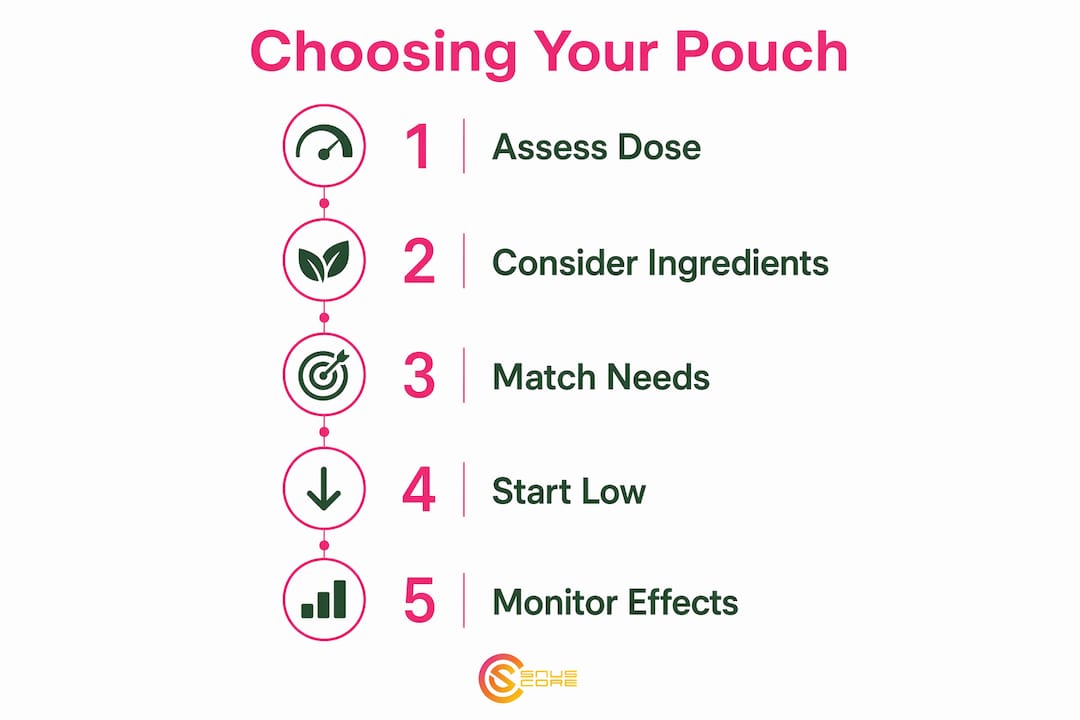
Start with your current caffeine tolerance. If you drink one cup of coffee a day, a 50 mg pouch is the right starting point. If you regularly consume two or more cups or use pre-workout supplements, 75–100 mg is a reasonable target. If you are caffeine-sensitive or new to pouches entirely, start at 20–25 mg and assess from there.
Steps for selecting the right product:
- Set your dose target based on current caffeine intake and sensitivity
- Decide between caffeine-only and nootropic blends: if you want cognitive support beyond alertness, choose a product with disclosed nootropic doses
- Check the label: full ingredient disclosure with milligrams per pouch is the minimum standard
- Evaluate flavor options: you will wear the pouch for 20–45 minutes, so flavor longevity matters
- Confirm nicotine-free status: every product on this list qualifies, but always verify before purchasing
- Check U.S. availability: all listed brands ship domestically; some offer subscription pricing that reduces cost per pouch
On timing: place the pouch 10–15 minutes before you need peak performance. Pre-workout, before a long drive, or before a demanding work session are all practical windows. Spacing pouches at least 3–4 hours apart keeps caffeine levels consistent and avoids accumulation.
Pro Tip: Choose a caffeine-only pouch like C.R.E.A.M. Energy or Nectr Energy when you need reliable, fast energy without complexity. Choose a nootropic pouch like Roon or Nectr Focus when the task requires sustained attention, memory recall, or creative output over several hours.
One limit worth respecting: stacking two high-dose pouches in a short window can push total caffeine above 200 mg quickly. Combined with coffee or other caffeine sources, that accumulates fast. Most users find one 50 mg pouch every 3–4 hours is the most sustainable pattern for daily use.
Key Takeaways
The best caffeine pouches in 2026 combine transparent dosing, clinically supported ingredients, and zero nicotine to deliver clean, precise energy that coffee cannot match for portability or speed.
| Point | Details |
|---|---|
| Dose determines everything | Match caffeine per pouch to your tolerance: 20–25 mg for beginners, 50–80 mg daily, 100 mg+ pre-workout. |
| Nootropic claims require disclosure | Only trust nootropic pouches that list exact milligrams per pouch; proprietary blends cannot be verified. |
| Absorption speed is the key advantage | Buccal caffeine reaches the bloodstream in 5–15 minutes vs. 30–45 minutes for coffee. |
| Top picks by use case | Roon and Nectr Focus for nootropic depth; Wip for maximum caffeine; Grinds for beginners; C.R.E.A.M. Energy for clean labels. |
| Snuscore for variety | Snuscore stocks a wide range of caffeine and tobacco-free pouches, including multiple brands from this list, with educational support for new and experienced users. |
Snuscore carries caffeine pouches across every dose and format
If you have read through this comparison and know which dose tier or brand type fits your needs, Snuscore is a practical next step. As an online retailer specializing in tobacco-free pouches, Snuscore stocks caffeine pouches across the full dose range, from beginner-friendly low-dose options to high-strength pre-workout formats.
Snuscore is not a manufacturer. It is a retailer that carries multiple brands, which means you can compare options side by side in one place rather than visiting each brand’s site separately. Volume discounts are available, and the product catalog includes educational guidance for users new to the pouch format. For anyone moving away from energy drinks, nicotine pouches, or coffee and looking for a cleaner alternative, Snuscore’s caffeine pouch selection covers the category without requiring a brand commitment upfront.
FAQ
What are the highest-rated caffeine pouches right now?
Roon, Nectr Focus, and Wip consistently rank at the top for ingredient quality, dose transparency, and user satisfaction. Grinds holds the strongest legacy reputation for beginners.
Are caffeine pouches actually effective?
Yes. Buccal caffeine absorption is clinically documented, with onset in 5–15 minutes and effects lasting 3–5 hours at moderate doses. The delivery method is well-studied and produces measurable alertness and performance improvements.
What pouches does Joe Rogan use?
Joe Rogan has publicly discussed Zyn nicotine pouches, not caffeine pouches specifically. Roon is the brand most associated with the nootropic pouch category that overlaps with his audience.
What is the safest caffeine dose per pouch for daily use?
50 mg per pouch is the standard daily-use dose in 2026, equivalent to roughly half a cup of coffee. Users sensitive to caffeine should start at 20–25 mg and assess tolerance before increasing.
Can you use caffeine pouches instead of coffee every day?
Caffeine pouches can replace the functional caffeine delivery of coffee, but not its antioxidants or ritual. Many users combine both, using coffee in the morning and pouches when portability or precision matters more.
Recommended
- Nicotine Pouches vs Energy Drinks: Which Keeps You More Focused? ➤ The latest news, tips, and insights on nicotine pouches | SnusCore
- Why Caffeine Pouches Are the Next Big Trend ➤ The latest news, tips, and insights on nicotine pouches | SnusCore
- Glick Energy Pouches: The Ultimate On-the-Go Boost ➤ The latest news, tips, and insights on nicotine pouches | SnusCore
- Nicotine vs Caffeine: What’s the Difference? ➤ The latest news, tips, and insights on nicotine pouches | SnusCore


