


What are the main chewing tobacco alternatives available in 2026?
The best chewing tobacco alternatives fall into four clear categories: tobacco-free nicotine pouches, herbal nicotine-free dips, FDA-approved nicotine gum and lozenges, and functional caffeine or nootropic pouches. Each category serves a different goal, and picking the wrong one is the most common reason people go back to dipping.
About 4.1% of U.S. adults still use smokeless tobacco products, according to CDC 2023 data. That’s a large group of people who know the risks and are still looking for something that actually works as a replacement.
Here is what each category offers:
- Tobacco-free nicotine pouches (VELO, ICEBERG, KILLA): Contain nicotine but no tobacco leaf. Remove carcinogens associated with traditional dip. Best for harm reduction without quitting nicotine. The nicotine pouch market reached $8.6 billion in 2025.
- Herbal nicotine-free dips (Smokey Mountain, BaccOff): No nicotine, no tobacco. Use food-grade ingredients to replicate the texture and ritual of dipping. Best for breaking chemical dependency while keeping the physical habit.
- Nicotine gum and lozenges (Nicotine gum, Nicotine lozenges): FDA-approved cessation aids. Deliver controlled nicotine doses to ease withdrawal. Designed as temporary quitting tools, not long-term substitutes.
- Functional and nootropic pouches (PABLO): No nicotine, no tobacco. Deliver caffeine, L-theanine, and other cognitive ingredients in pouch format. Best for users who relied on nicotine for focus and want a clean replacement.
The key distinction across all categories: nicotine pouches address chemical dependency while keeping the oral ritual; herbal dips address the ritual without the chemistry; NRT products address the chemistry without the ritual; and functional pouches replace both with something different entirely.
How do the top smokeless tobacco alternatives compare?

Every major alternative to chewing tobacco differs on what it removes, what it keeps, and what it adds. The table below covers the eight leading options across the dimensions that matter most for your decision.
| Product | Type | Contains Nicotine | Best For | Pros | Cons | Flavors | Usage Method |
|---|---|---|---|---|---|---|---|
| VELO | Nicotine pouch | Yes | Harm reduction, tobacco-free switch | No tobacco leaf, multiple strengths, widely available | Still addictive, no ritual mimicry | Mint, citrus, berry, and others | Under the lip |
| ICEBERG | Nicotine pouch | Yes | Menthol/cool flavor preference | Distinctive icy flavor, tobacco-free | Nicotine dependency remains | Menthol, ice, cool mint | Under the lip |
| KILLA | Nicotine pouch | Yes | Experienced users, high-strength needs | Bold flavors, potent nicotine content | Not suited for beginners or tapering | Fruit, mint, cola, and others | Under the lip |
| Smokey Mountain | Herbal dip | No | Ritual replacement, nicotine-free | No nicotine or tobacco, food-grade ingredients | No chemical craving relief | Mint, wintergreen, classic | Packed in cheek |
| BaccOff | Herbal dip | No | Quitting dipping, behavioral replacement | Pouches and loose cut formats, quit-focused | No nicotine, may feel insufficient for heavy users | Mint, straight, wintergreen | Packed in cheek |
| Nicotine gum | NRT | Yes | Nicotine tapering, cessation | FDA-approved, controlled dosing | No oral ritual, temporary use only | Mint, fruit, cinnamon | Chewed |
| Nicotine lozenges | NRT | Yes | No-chew cessation, measured dosing | Discreet, convenient, FDA-approved | No pouch feel, temporary use only | Mint, cherry | Dissolved in mouth |
| PABLO | Functional pouch | No | Focus, energy without nicotine | Caffeine and nootropics, no dependency | No nicotine relief, different effect profile | Varies | Under the lip |

Tobacco-free nicotine pouches: VELO, ICEBERG, KILLA
VELO is the most accessible entry point for users switching from traditional dip. It comes in multiple strengths and a broad flavor range, making it practical for gradual tapering. ICEBERG targets users who want a strong menthol sensation, which closely mimics the cooling effect many dippers associate with mint-flavored tobacco. KILLA sits at the higher end of the nicotine strength spectrum and suits experienced users who find standard pouches underwhelming. All three remove the tobacco leaf and the carcinogens that come with it, though nicotine addiction risk remains with each.
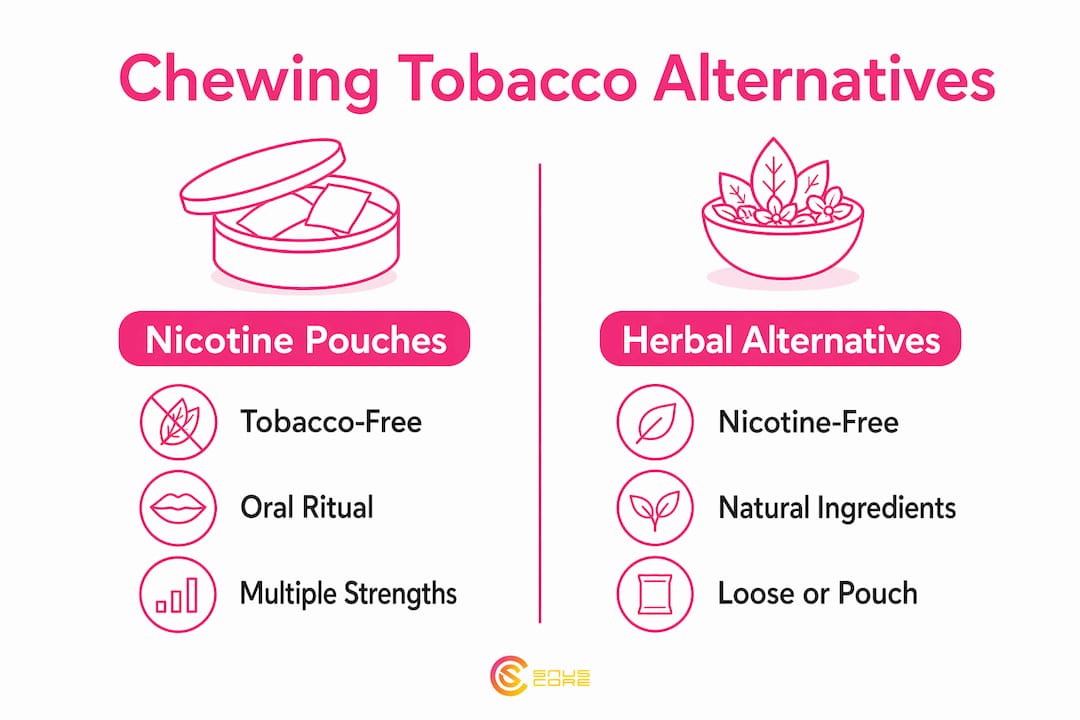
Herbal alternatives: Smokey Mountain and BaccOff
Smokey Mountain uses corn silk and kudzu root to replicate the texture of traditional moist snuff. The physical experience is close enough that many users report the transition feels natural. BaccOff offers both loose cut and pouch formats, which matters for users whose habit is tied to a specific format. Neither product delivers nicotine, so they work best for users whose primary goal is breaking the chemical dependency while keeping the physical ritual intact.
NRT options: nicotine gum and lozenges
Nicotine gum and lozenges solve the chemistry but not the behavior. They are the right choice when the goal is complete cessation and the physical ritual is not a major trigger. Both are available over the counter at most pharmacies across the U.S.
PABLO: the functional pouch option
PABLO delivers caffeine and nootropic ingredients in the same under-the-lip format as a nicotine pouch. For users who used dip as a focus tool, PABLO offers a nicotine-free alternative that addresses the cognitive side of the habit without building chemical dependency.
Pro Tip: If you are a heavy dipper switching to nicotine pouches, start at a strength that matches your current intake rather than going lower immediately. Dropping too fast increases relapse risk in the first two weeks.
How do you choose the right alternative for your quitting goals?
Your choice depends on two things: how dependent you are on nicotine, and how tied your habit is to the physical ritual of dipping.
Assess your nicotine dependence first. The clearest signal is timing. Users who dip within 30 minutes of waking or use more than three tins or pouches per week benefit most from nicotine replacement therapy. If that describes you, starting with a nicotine-containing product like VELO or a standard NRT is the practical first step.
Match the product to your primary trigger:
- You want to cut cancer risk but are not ready to quit nicotine: VELO, ICEBERG, or KILLA remove the tobacco leaf and its associated carcinogens. This is harm reduction, not full cessation.
- You want to quit nicotine and keep the ritual: Smokey Mountain or BaccOff replicate the physical experience with zero chemical dependency.
- You want to quit nicotine and replace the focus benefit: PABLO or similar functional pouches deliver caffeine and cognitive ingredients in the same format.
- You want a structured taper with clinical support: Nicotine gum or lozenges offer controlled dosing and are FDA-approved for cessation.
Gradual transitions outperform abrupt switches. Mixing an herbal dip with a nicotine pouch during the transition period lets you reduce nicotine intake while keeping the physical sensation consistent. Abrupt switches, especially from heavy use, tend to fail because they address only one side of the habit.
Identify your high-risk situations. Clinicians recommend having oral substitutes ready before you encounter your strongest triggers, whether that is driving, working outdoors, or after meals. Preparation matters more than willpower in the first few weeks.
Pro Tip: Replace the spit ritual with water or a crunchy low-calorie snack like carrots or celery. Hydration and healthy snacks reduce the behavioral pull of the habit and lower relapse risk during the transition period.
What do experts say about quitting smokeless tobacco?
Quitting chewing tobacco is often harder than quitting smoking. Smokeless tobacco delivers more nicotine into the bloodstream than cigarettes, and the habit is reinforced by a physical ritual that cigarettes do not replicate. That combination of chemical dependency and behavioral conditioning is why so many users struggle even when they are motivated to stop.
The spectrum of alternatives now spans from nicotine harm reduction products all the way to completely nicotine-free behavioral and cognitive enhancement options. That range matters because no single product fits every user’s situation.
Key finding: Clinicians agree that identifying high-risk situations and having oral substitutes immediately available is one of the most effective strategies for preventing relapse when quitting smokeless tobacco.
The physical sensation of “cheek-packing” is a stronger behavioral anchor than most users expect. Gradual tapering that combines nicotine and herbal products tends to outperform abrupt switches because it addresses both the chemical and the sensory sides of the habit at the same time. Users who try to quit cold turkey while also abandoning the physical ritual face two withdrawal challenges simultaneously.
Research-backed strategies that improve quitting success:
- Set a quit date one to two weeks out and reduce intake before that date.
- Identify the three or four situations where the urge is strongest and plan a specific substitute for each.
- Keep an oral substitute within reach at all times during the first month.
- Use nicotine replacement if you dip within 30 minutes of waking or use more than three tins per week.
- Combine an herbal dip with a nicotine pouch during the transition rather than switching abruptly.
- Replace the spit ritual with water, gum, or a crunchy snack to reduce behavioral triggers.
- Consult a physician before starting any cessation plan, particularly if you plan to use NRT products.
The psychological importance of ritual is well-documented in cessation research. Users who find a substitute that mimics the sensory experience of dipping, whether that is a herbal dip, a nicotine pouch, or a functional pouch, report higher satisfaction and lower relapse rates than those who rely on willpower alone.
Snuscore carries the alternatives covered in this guide
If you have read through the options and want to buy without hunting across multiple sites, Snuscore stocks a curated range of tobacco-free nicotine pouches, including VELO, ICEBERG, KILLA, and PABLO, all in one place.
Snuscore is an online retailer, not a manufacturer. That means the focus is on product selection, accurate strength labeling, and support for users who are new to pouches and need help matching a product to their current intake level. Volume discounts are available, and the catalog covers both nicotine-containing and nicotine-free formats so you can order across categories as your needs change. Browse the full range of tobacco-free pouches at Snuscore.
FAQ
What can I use instead of chewing tobacco?
The main options are tobacco-free nicotine pouches (VELO, ICEBERG, KILLA), herbal nicotine-free dips (Smokey Mountain, BaccOff), FDA-approved nicotine gum and lozenges, and functional pouches like PABLO. The right choice depends on whether you want to reduce harm, quit nicotine, or replace the physical ritual.
What is a good alternative to Copenhagen dip?
Smokey Mountain and BaccOff are the closest matches for users who want the same loose-cut or pouch format without nicotine or tobacco. For users who want to keep nicotine, VELO or KILLA offer a similar under-the-lip experience in a tobacco-free pouch format.
Will I feel better if I quit chewing tobacco?
Yes. Quitting reduces exposure to the carcinogens in smokeless tobacco that are linked to oral cancer, gum disease, and cardiovascular damage. Many users report improved gum health and lower blood pressure within weeks of stopping.
What is a good substitute for tobacco that helps with cravings?
Nicotine gum and lozenges are FDA-approved for managing cravings during cessation and deliver controlled nicotine doses to ease withdrawal. Tobacco-free nicotine pouches like VELO serve a similar function while maintaining the oral ritual that NRT products do not replicate.
Key Takeaways
Tobacco-free nicotine pouches remove the carcinogens in traditional dip while maintaining the oral ritual, making them the most practical first step for heavy users who are not yet ready to quit nicotine.
| Point | Details |
|---|---|
| Four main categories | Nicotine pouches, herbal dips, NRT products, and functional pouches each serve a different cessation goal. |
| Nicotine dependence test | Users who dip within 30 minutes of waking or use more than three tins per week benefit most from nicotine replacement therapy. |
| Ritual matters as much as chemistry | Gradual tapering combining herbal and nicotine products outperforms abrupt switches for most users. |
| Herbal dips for ritual replacement | Smokey Mountain and BaccOff use food-grade ingredients to replicate the texture of traditional dip with zero nicotine. |
| Snuscore for product access | Snuscore stocks VELO, ICEBERG, KILLA, PABLO, and other tobacco-free options with support for beginners and experienced users. |
Recommended
- Nicotine Pouches in France: A New Trend in Tobacco Alternatives ➤ The latest news, tips, and insights on nicotine pouches | SnusCore
- Exploring Nicotine Pouch Flavors: Mint, Fruit, and Exotic Blends ➤ The latest news, tips, and insights on nicotine pouches | SnusCore
- Sweet Tooth Edition: Nicotine Pouches That Taste Like Desserts ➤ The latest news, tips, and insights on nicotine pouches | SnusCore
- Snus Core in Germany: The Ultimate Choice for Nicotine Pouches ➤ The latest news, tips, and insights on nicotine pouches | SnusCore


